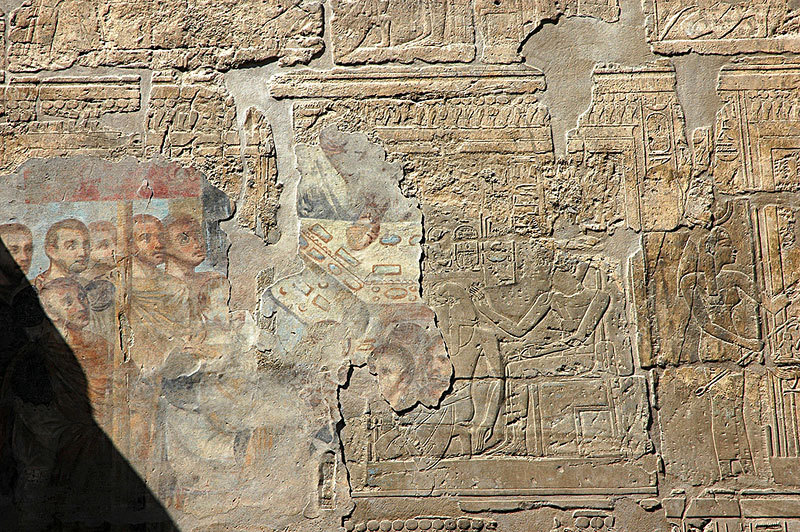
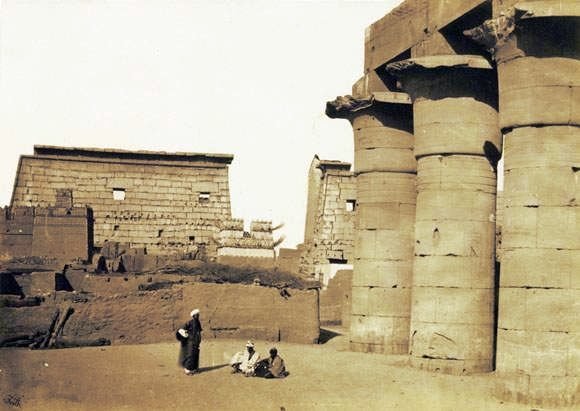
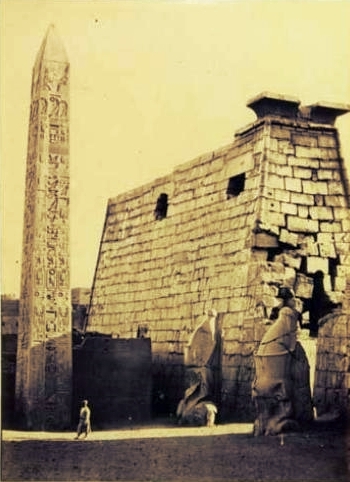
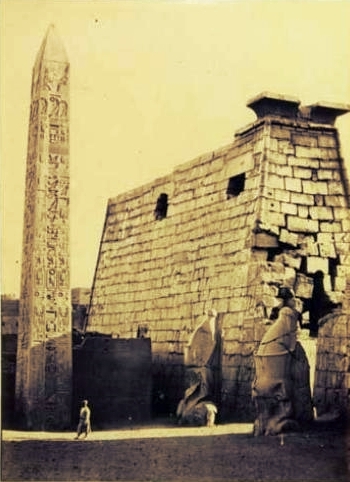
reliefs in the Luxor Temple Wall reliefs from the period of Amenhotep III (r. ca. 1391-1353 BC) plastered over during Roman times with colorful images of roman officials and Copts looking to the now lost image of the Emperor. This room was initially intended to the cult of the king Amenhotep III and continued its role during the Roman occupation but to the worship of the Roman Emperor.
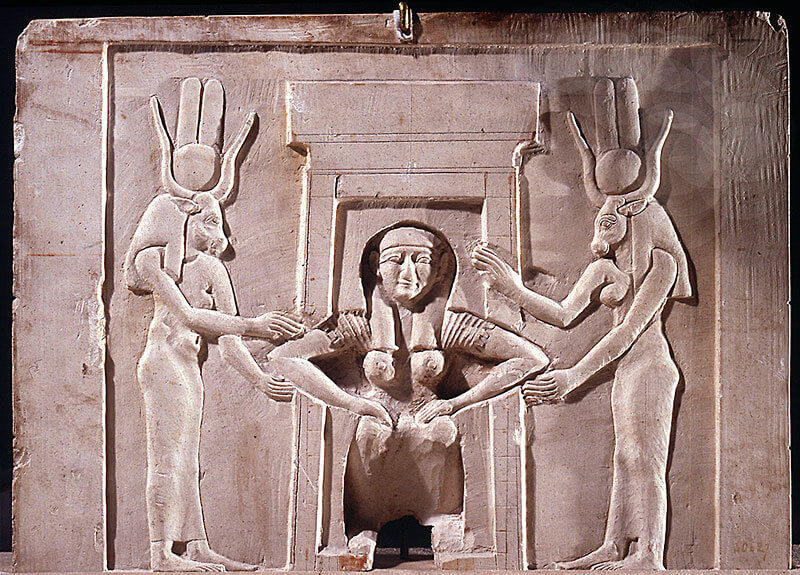
Plaque of a Woman Giving Birth This plaque depicts a woman on the birthing-chair, being assisted by two women with Hathor heads and crowns, the Hathor crown consists of two horns with the sun disk between them and tall plumes. The figures of the women are rendered in frontal view, and are nearly three-dimensional. They are carved in sunken-relief, that was characteristic of the Ptolemaic Period. The stone was placed as an ex-voto, most probably by a pious person, at the temple of Hathor in Dendera, to thank the goddess for helping in a confinement. Hathor was worshiped at her main cult center at Dendera and in other places in Egypt. She was later identified with the Greek goddess Aphrodite. She acted as nurse and was the patroness of pregnant woman in the confinement chamber. In the Tale of the Doomed Prince, seven Hathor nurses were mentioned in the context of protecting the newly born prince. Ptolemaic Period c.a 305-30 B.C Carved limestone from Dendera Temple Complex. Now in the Egyptian Museum Cairo.
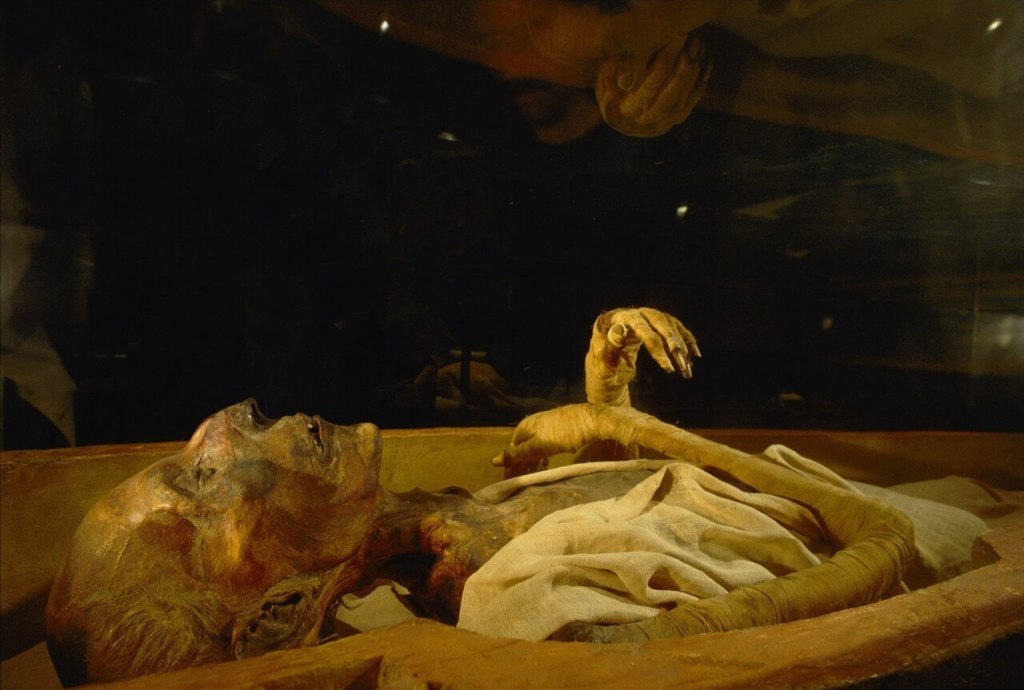
The mummy of Ramesses II was among those found in the royal cache (DB320) at Deir el-Bahari West Thebes. It was completely covered with linen bandages that bear the king’s name and epithets in Hieratic script. The mummy has silky hair, which was white at the time of death, but has yellowed from the preservative chemicals. His nostrils were filled with resin and seeds, perhaps to better hold their shape. According to the X-rays the king was suffering from dental problems and severe arthritis in his hip joint. Ramesses II’s mummy was sent to Paris for further studies and preservation. The king most probably died in his late eighties or early nineties. New Kingdom, 19th Dynasty, reign of Ramesses II c.a 1279-1213 BC. Now in the Royal Mummy Room Egyptian Museum Cairo.
Visitors peer at the mummified remains of Ramesses II in Cairo’s Egyptian Museum. The pharaoh, who reigned from 1279-1213 BC is considered one of the most powerful rulers of the Egyptian Empire.





























 khaled gamelyanl blogger