









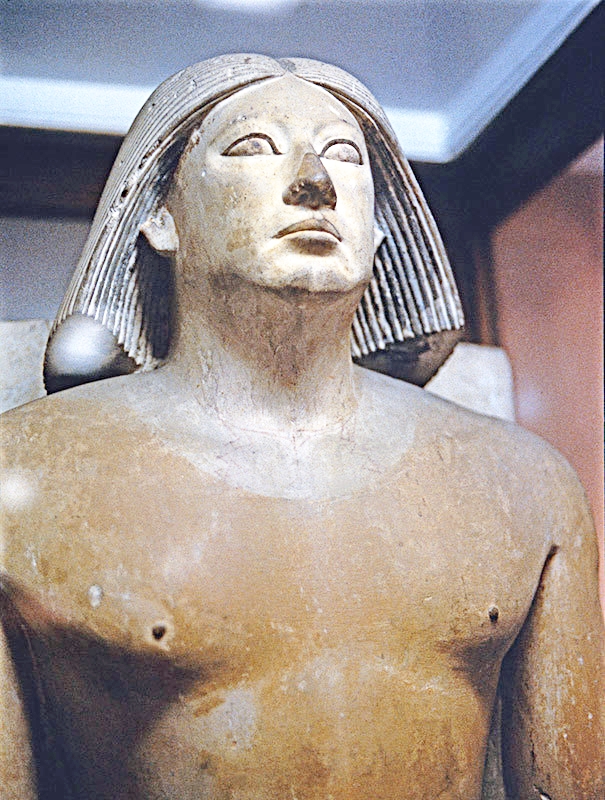
Statue of Ranefer
A statue depicts the young Ranefer as a handsome, athletic and a muscular man wearing a short kilt tied at the waist and a simple short wig. He is portrayed in the traditional pose, advancing with the left leg forward, his hands by his sides holding two cylinders, having a serious expression and a look which is gazing into the distance beyond earthly life.
This splendid statue was found with another statue for him too, almost identical, in two niches in the chapel at his tomb at Saqqara. This one shows him in the flush of youth while the other in old age.
Ranefer was a High Priest of Ptah and Seker in Memphis at the end of the 4th and the beginning of the 5th Dynasty. His name means “Ra is beautiful”. His main title was “greatest of the directors of craftsmen belonging to the day of festival”. This is a variation of the title normally assigned to the High Priest of Ptah.
Old Kingdom
5th Dynasty
c.a 2494-2345 B.C
Painted limestone
from Saqqara Necropolis
Now in the Egyptian Museum
Cairo
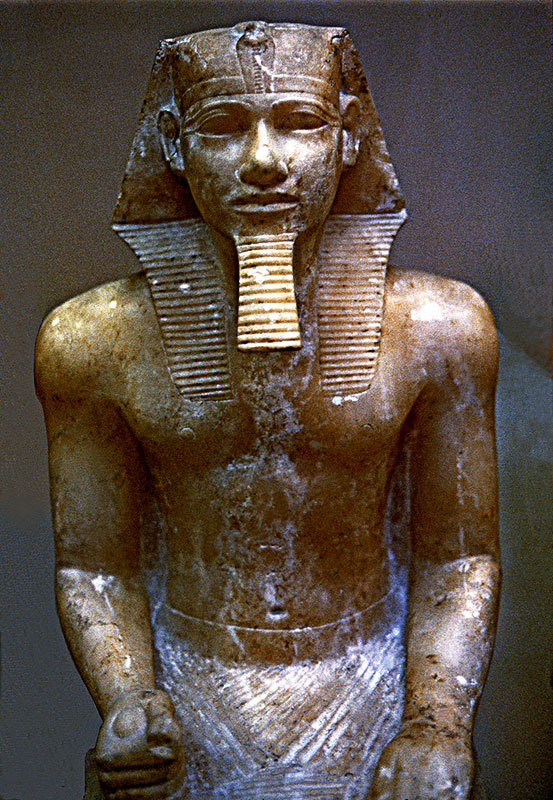
Seated Statue of King Khafra
The king has his chest and shoulders embodying strength in repose sits on a simple block, both hands lie on his lap, the left is open palm downwards while the right is fisted thumb up around a folded piece of cloth.
Old Kingdom
4th Dynasty
c.a 2613-2494 BC
Alabaster,
from Memphis.
Now in the Egyptian Museum
Cairo.
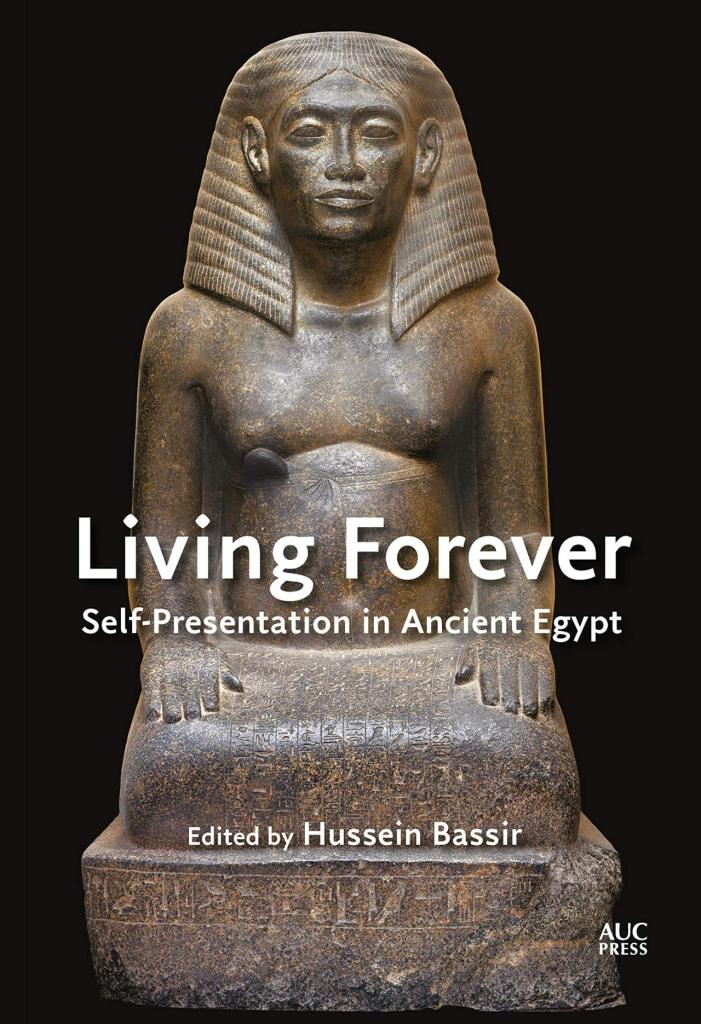
“Self-presentation is the oldest and most common component of ancient Egyptian high culture.
It arose in the context of private tomb records
where the character and role of an individual―invariably a well-to-do non-royal elite official or administrator―were presented purposefully
published by inscription and image, to a contemporary audience and to posterity.
Living Forever:
Self-presentation in Ancient Egypt looks at how and why non-royal elites in ancient Egypt represented themselves, through language and art, on monuments, tombs, stelae, and statues, and in literary texts, from the Early Dynastic Period to the Thirtieth Dynasty. Bringing together essays by international Egyptologists and archaeologists from a range of backgrounds, the chapters in this volume offer fresh insight into the form, content, and purpose of ancient Egyptian presentations of the self.
Applying different approaches and disciplines, they explore how these self-representations, which encapsulated a discourse with gods and men alike, yield rich historical and sociological information, provide examples of ancient rhetorical devices and repertoire, and shed light on notions of the self and collective memory in ancient Egypt.”
Living Forever
Self-Presentation in Ancient Egypt
by Hussein Bassir

Ramesses II Making an Offering to Amun-Re
Relief depicts the pharaoh Ramesses II
making an offering of Nu-vases
to the seated god Amun-Re
detail of a wall carving in the Small Temple of Hathor and Nefertari at Abu Simbel
Lower Nubia.
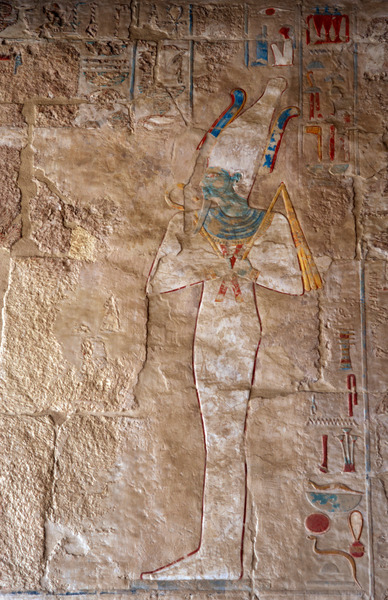
Osiris.
Polychrome limestone reliefs from the Temple of Hatshepsut.
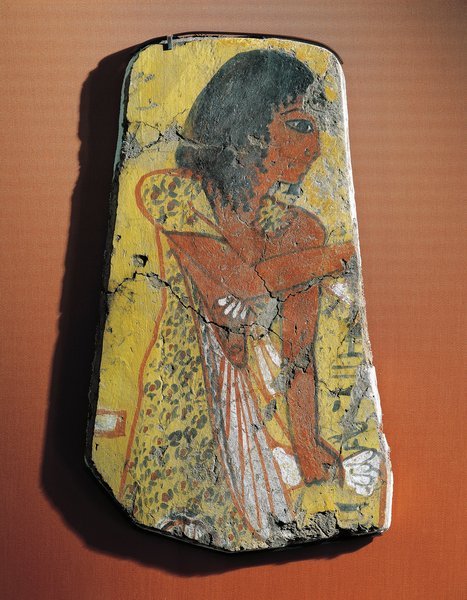
Fragment of a painting on lemon wood depicting a priest during a burial ceremony
from Deir el-Medina
New Kingdom
19th Dynasty
Reign of Ramsesses II
c.a 1279-1213 B.C
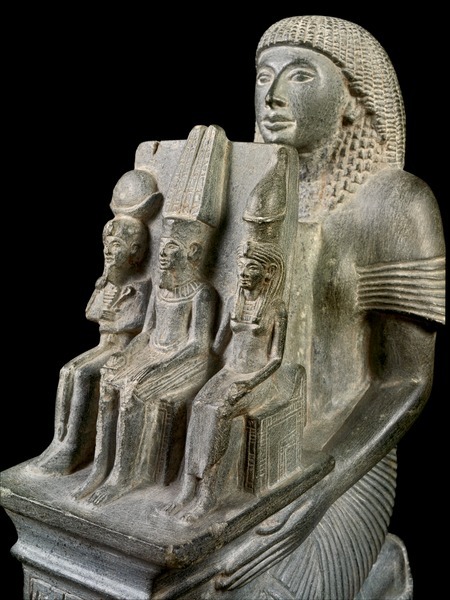
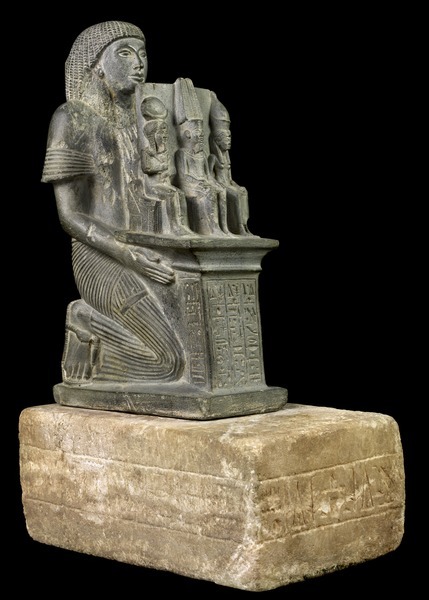
Statue of Ramessesnakht holding the Theban Triad
Ramessesnakht served
as High Priest of Amun from the reigns of Ramesses IV
until that of Ramesses IX
He is donating a statue of the Theban family
Amun is seated in the middle of the little group wearing tall feathers on his flat topped crown
to his left his wife the goddess Mut with a special tall crown and their son Khonsu sitting at his father’s right.
New Kingdom
20th Dynasty
Ramesside Period
c.a 1189-1077 B.C
Schist statue with a calcite base.
Now in the Egyptian Museum
Cairo.
 khaled gamelyanl blogger