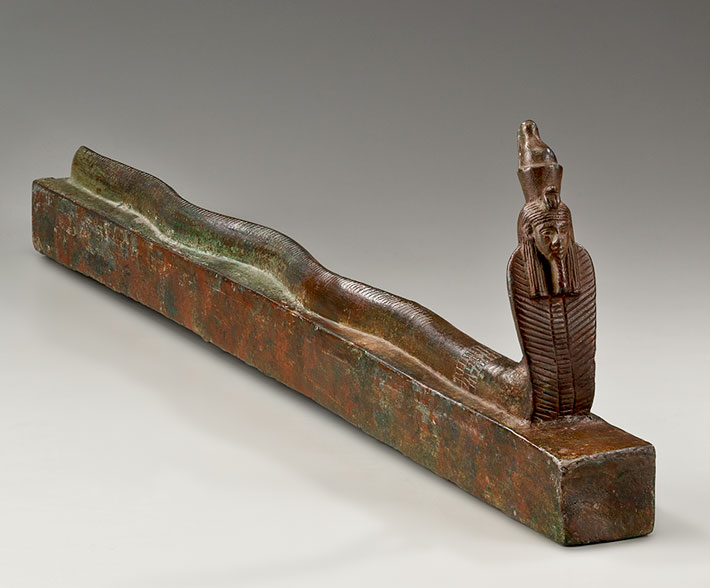
This bronze cobra coffin with the head of a human wearing a crown represents the god Atum, who was thought to have swum in primordial waters before creating the world.
Baby crocodile
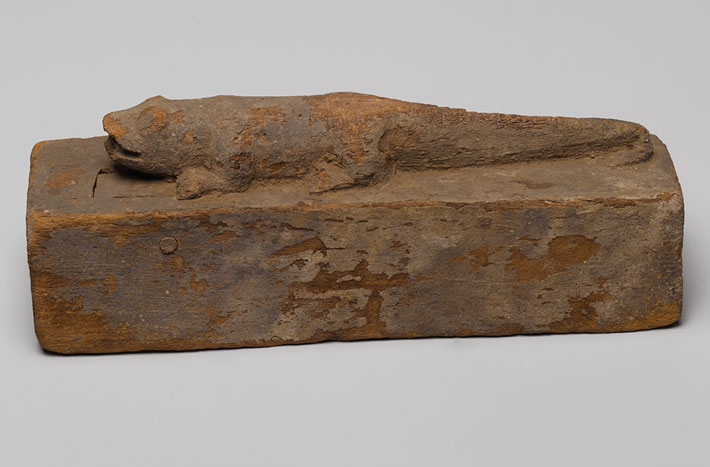
Baby crocodile mummies in wooden coffins like this were used by ancient Egyptians seeking the help of the crocodile god Sobek.
Colorful wooden coffin

A painted wooden coffin dating to between 664 B.C. and 332 B.C. depicts a shrew, a nocturnal animal, which represented Kenty-irty, a god with the ability see in darkness.
Petrie Museum of Egyptian Archaeology, From Deir el-Medina
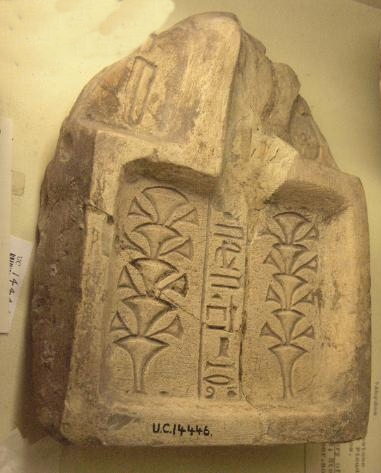
Petrie Museum of Egyptian
Archaeology, From Deir el-Medina
19th dynasty, around 1295-1186 BC
Limestone
Offering table of Penrennut, “Servant
in the Place of Truth” as the central
column of hieroglyphic inscription on
the base of the table states. The
inscription is flanked by 2 columns of
incised vegetation motifs, most
probably depicting lotuses. The
damaged spout carries remains of
incised depictions of a crude cake on
one side and possibly two leeks on the
other side.
Length: 18.5 cm
Width: 14.5 cm
Depth: 4.75 cm
Stela of Ramose From Deir el-Medina
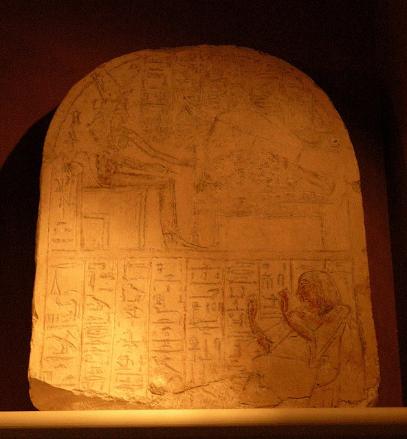
Bankes stela no. 3.
Stela of Ramose
From Deir el-Medina
Limestone
19th dynasty
Height: 46 cm
Width: 32 cm
This round-topped stela consists of 2 registers. In the top register a goddess sits on her throne facing right. She wears a double crown of Upper and Lower Egypt and is described by the inscription as Mut, the great one, lady of Isheru, mistress of the House of Amun, beautiful of face in Hut-sekhem. Protection, life and dominion be around her every day. Mut’s most favoured epithet among the artisans 2009, 120). The same epithet appears also on Bankes stela no. 9. Hut-sekhem is situated south-east of Abydos, it is the modern Hiw. In Greco-Roman Period the town was known as Diospolis Mikra or Diospolis Parva (Baines, 1996, 114). Mut is sitting in front of an offering table piled with ox meat and large lotus bouquets. Offering all good and very pure things to the lady of the Two Lands, the mistress of the House of Amun. In the bottom register a man is kneeling, facing the goddess, his hands in the adoration pose. Around him and above him there are 9 columns of hieroglyphic inscription: Giving praise to Mut, lady of heaven, [mistress of] the House of Amun, with beautiful hand carrying the sistra, sweet of voice. Singers, be content with all she says, pleasing(?) to (your) hearts. May she give life, prosperity and health, intelligence, [favour] and
love to the soul of the scribe in the Place of Truth, Ramose, true of voice with the great god. Ramose is one of the best documented officials from Deir el-Medina. Although he was not born in the village, he became one of the richest men who ever lived there. He was a son of lady Kakaia and a retainer Amenemhab (someone who delivered messages to officials in the Theban area). Ramose was born around 1314 BC (Booth, 2006, 185). He must have attended scribal schools before he became a scribe at the temple of Tuthmosis IV. He then moved to Deir el-Medina, where he married Mutemwia, the “lady of the house, whom he loves”. He was appointed by vizier Paser as “scribe of the tomb” in year 5 of Ramesses II (O.CGC 25671). He served in the rank at least until year 38 of Ramesses II (O.CGC 25809) (Davies, 1996, 98). As Ramose and Mutemwia continuously failed to conceive a child they petitioned various deities associated with childbirth and fertility. Stela 50066, now in Turin, is dedicated to Qudshu, the Asiatic goddess of love. There are many stelae and statues recording their plea, but the couple remained childless. In the end they adopted Kenherkhepshef, like Ramose, most probably a new arrival in the village, to be an apprentice who would take the role of the eldest son, take over Ramose’s profession and perform burial rites for them. Ramose’s family occupied a house in the northern part of the village. He also owned some land outside Deir el-Medina and there are 3 decorated tombs attributed to him – TT7, TT212 and TT250.
Ramose was contemporary with the foreman Kaha of the Bankes stela no. 2.
The next stela also belonged to Ramose.
Stela depicting Huy From Deir el-Medina
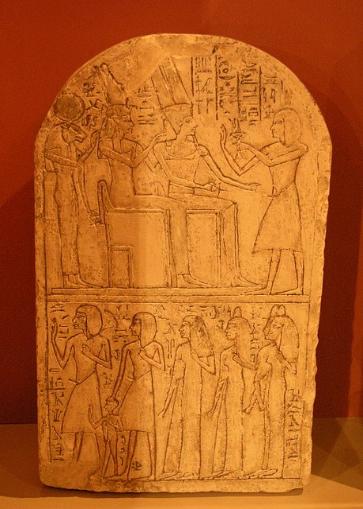
Bankes stela no. 2.
Stela depicting Huy
From Deir el-Medina
19th dynasty, the beginning of Ramesses II reign,
1270s BC
Limestone
Height: 46 cm
Width: 28 cm
This round-topped stela is divided into 2 registers. In the top register, two deities seated on their thrones, are described This round-topped stela consists of 2 registers. In the top register, two deities seated on their thrones, are described in the hieroglyphic inscriptions together with their epithets. The first one is Amun-Re, lord of the Thrones of the Two Lands, residing in Waset, foremost of the Westerners, the great god. Behind Amun-Re sits his daughter Mut, lady of
heaven, mistress of the Two Lands. A goddess with a head of a lion stands behind Mut’s throne. Jaroslav Černý translated the inscription that identifies her as Daughter of Re, the cobra. Jan Kunst, a Dutch Egyptologist, points out that to translate the name as “The Cobra”, there would have to be
the feminine definite article tA, instead of the masculine pA. He suggests that the goddess might perhaps be Wadjet. Wadjet is sometimes referred to as “Eye of Re” and can be depicted in leonine form or as a lion-headed woman, just like Bastet, with whom she was strongly associated. Moreover, she was strongly associated with Mut, which might explain her
presence in this otherwise unusual combination. One of her epithets is “She of Pe”, py.t, which might somehow (but not fully) explain the pA. The cobra hieroglyph is likely to be the determinative for a goddess, rather than an ideogram, Jan Kunst explains in our private correspondence.
A man stands in front of the divine triad. His hands are raised in adoration while he makes an offering burning incense in a holder placed in his left hand. The inscription says: Made by the servant in the Place of Truth, Huy, true of voice. The bottom register contains a procession of 2 men, 4 women and a small child. They all face the triad and are meant to be following Huy. The columns of inscriptions around them give us their names, sometimes their titles
and their relationship to Huy. The first man on the left – directly behind Huy in the procession – is Kaha, who was most probably responsible for the setting up of this stela. The inscription reads Made by the servant in the Place of Truth, Kaha, true of voice. Behind Kaha is his brother Paherypedjet. Paherypedjet’s hand touches the head of the child standing between Kaha and himself, his son Khuru. He is depicted as a small naked boy. This stela, with representatives of three generations of the same family, is an example of the valuable sources of information helping Egyptologists to reconstruct chronological frameworks of the work force at Deir el-Medina.
Behind Paherypedjet stands his mother Tanehsy, followed by his sister, lady of the house, Tuy. The procession is closed by two women standing side by side, his son (sic.sister) Takhat and his sister Na’ay, true of voice. Huy served as a distinguished official at Deir el-Medina in the early 19th dynasty. His title was “chief craftsman in the Place of Truth in West Thebes” (Davies, 1996, 15). Tanehsy, who is the first lady from the left, is Huy’s wife. She is the mother of Kaha, who stands behind his father Huy in the procession – the first to stand on the left on the lower register of the stela. Kaha was a foreman for the “left side” of the crew at Deir el-Medina during the reign of Ramesses II (1279-1212 BC). From a stela recovered from the court of his tomb TT 360 his title was “chief workman of Usermaatre-setepenre in the Place of Truth”. Kaha’s status was reflected in the fact that he occupied one of the largest houses in the settlement (N.E.VIII) built in the 18th dynasty (Davies, 1996, 16). As Kaha’s title on this stela does not state he was a foreman, it could be dated to the very beginning of Ramesses II reign as it is thought Kaha was appointed to the foremanship during the early years of the reign. The family relations as stated in the inscriptions relate to Kaha as a dedicator of the stela rather than Huy, the dedicatee. Kaha’s wife Tuy is the lady standing behind Kaha’s mother Tanehsy. They are believed to have had a large family with Kaha of at least 6 sons and 5 daughters (Davies, 1996, 16). One of the sons depicted here is Khuru, the little boy, standing near his uncle – Kaha’s brother – Paherypedjet. Takhat and Na’ay are both identified as Kaha’s sisters, but I have not found evidence for a sister named Na’ay. We know that Na’ay was a name of Kaha’s daughter, but a daughter would not have been a grown up lady as show on the stela at this time of Kaha’s life. In this particular case, the inscription definitely bears a mistake as the feminine ending for “snt” is missing and the word displays as the masculine form “sn”. The word is usually translated as sister, but it does not designate only a sister in ancient Egyptian relations. Sometimes it also means a wife, a niece, an aunt, etc. The word “sn”, usually translated as “brother”, is also used for male relations between people of different generations that are related directly (an uncle, a nephew, etc.) or by marriage (a brother-in-law).
Stela of draughtsman May

Bankes stela no. 1.
Stela of draughtsman May
From Deir el-Medina
End of the 18th, beginning of the 19th dynasty
Limestone
Height: 30 cm
Width: 21 cm
This is a round-topped stela of a two fold division. In the lunette the spatial region in the upper portion of the stela – the solar barque is carrying a solar disk above the sky, represented by the hieroglyphic sign pt (sky). A child with a thumb in his mouth sits on the right side of the barque. The lower register of the stela consists of an image of a man standing at the bottom of the right side of the stela. He is facing to his right. His arms are lifted in adoration pose. Above and in front of the figure there are 10 columns of hieroglyphic inscription. The columns are written from top to bottom and read from left to right. “Praise to Re when he sets in life in the western horizon of heaven. You have appeared in the western half as Atum who is in the evening, having come in your might having no adversaries and having taken possession of the sky as Re. You appear and shine upon the back of your mother, having appeared (as) king of Divine Ennead. I have done right in your presence, and kiss the ground (for?) your crew worshipping (whilst) you travel the heaven, your heart glad. The Island of Flame has become peaceful, your enemies are fallen and are no more. The evil dragon’s abode is doomed. Your corpse is Atum in the Boat of the Morning, the rightful one of the Two Lands. Beautiful is the Boat of the Evening when it has accomplished its end. (Said) by the draughtsman May, true of voice.” This type of stela is called a Lucarne stela. Altogether there have been identified 13 Lucarne stelae originating from Deir el-Medina. This stela is an early example of its type as the owner is depicted standing rather than kneeling in adoration. Only 1 other stela – Turin 50043 – shares this feature, all other 11 stelae depict the owner kneeling. Lucarne stelae share the following characteristics:
a solar barque shown in the lunette, usually placed above the pt sign
- a sun disk or another sun god representation is depicted in the solar barque
- sun god is accompanied by other symbols relating to him (adoring baboons, wedjat eyes)
- the owner either stands or kneels in adoration of the barque
- although the owner’s relatives can be depicted, it is seldom a case
- the hymn, written in columns, praises the rising and/or setting sun
Lucarne stelae were manufactured from late 18th dynasty until the 20th dynasty. They measure between 30 to 55 cm (Goyon, 2007, 1953-1954).
The owner of the stela was called May. He was a painter employed at the Theban Necropolis and living at Deir
el-Medina in the 18th dynasty, around 1300 BC. His title was the “outline draughtsman of Amun” (Rice, 105-106). His tomb is situated in the Western Necropolis at Deir el-Medina near the tomb of the architect Kha (TT8) and is numbered TT 338. The wall paintings from May’s tomb were detached from the walls and removed to Turin. They are displayed in Room III of the Museo Egizio. The stela would have come from a niche in May’s chapel, where it would have been placed on a stone pedestal (according to Bernard Bruyère). When Deir el-Medina was excavated during the last century, these chapels were partly or completely gone as they were built above the ground and made of mud bricks.
Egyptian Museum, Turin Stela no 50043
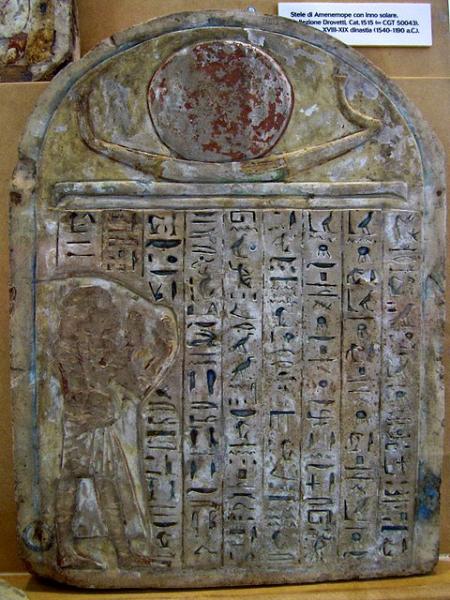
Stela of Amenemope From Deir el-Medina
18th-19th dynasty
Limestone
Dimensions: 39 x 29,1 x 2,4 cm
Inventory nu: Cat. 1515
RCGE 50043
This round-topped stela is divided into two registers. The upper register depicts the solar disk in the solar barque, resting on the hieroglyphic sign for sky. In the lower register the deceased is depicted standing on the left, facing to the right, with his arms raised in adoration. He wears an ankle-length kilt. The figure is in part chiseled out. The remaining area of the register is divided into 9 columns of hieroglyphic inscription. It contains an abbreviated version of a solar hymn. Some traces of preserved pigment are visible on the stela: red for the solar disk, yellow for the boat and its background, blue for the sky and the hieroglyphic signs. The dedicator of the stela is named as
Amenemope.
Tomb 291 at Deir el-Medina

Tomb 291 at Deir el-Medina
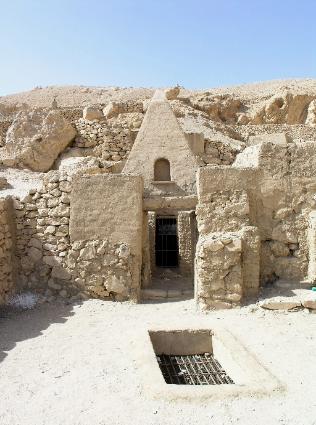
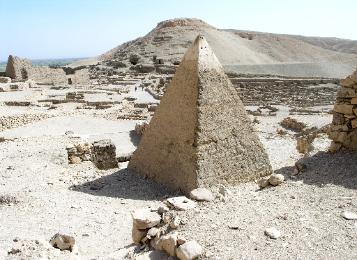
The Theban tomb 291 was discovered by the French Institute in the middle of their 1922 season. It is situated in the north-west part of the main cemetery at Deir el-Medina, at altitude of 115 m. It is about 90 m away from the south-west corner of the enclosure wall of the main Ptolemaic temple. The picture on the left is taken from the courtyard, looking west, the Theban hills are behind the tomb. The tomb shaft is visible in the foreground. Below is the picture from beyond the pyramidion of the tomb, looking East towards the settlement on the right, the temple enclosure wall in the distance on the left. The owner of the tomb was Nakht-Min. Late 18th dynasty Nakht-Min’s titles:
- Servant in the Great Place
- Servant in the Place of Truth
On the dating of the tomb
Precise dating of the tomb is difficult.
the epigraphic style of this tomb is more elaborate and less cursive and without any doubt older than the style in the 19th and 20th dynasties tombs at Deir el- Medina the title “Servant in the Great Place” is characteristic for the 18th dynasty rather than the Ramesside era
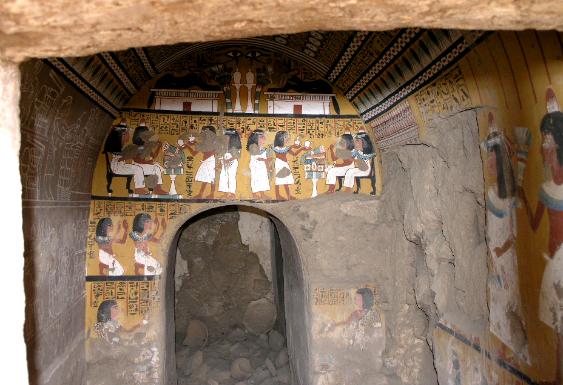
depiction of the god Amun is intact and it is situated in the prominent, well visible place, suggesting that the tomb predates the reign of Akhenaton the style of painting also gives good indications: the frieze is made up of series of lotus flowers alternating with bunches of grapes – an ornamental motif characteristic of the 18th dynasty the human figures have big heads for the size of their bodies. The body shape can be studied well on the two women in the 2nd register of the West wall for their transparent clothes show their silhouette: the stomachs are too big, the thighs are round, the arms are to the contrary slender. These characteristics do not meet the Ramesside style, but rather correspond with the Amarna style. do not meet the Ramesside style, but rather correspond with the Amarna style. The tomb’s painted reliefs seem comparable in style with the tomb of Ay in the Western Valley in particular. The now missing relief with depiction of the god Osiris in his shrine and with the offering table and the person making the offerings to the god can be seen in this picture. The graffito mentioned at the end of this page might be the one visible just above the lotus flowers on the offering table. Considering all these chronological indications and resemblances of the style, Bruyère dated the tomb to the end of the 18th dynasty or more exactly to the period immediately following the reign of
Akhenaton. Below is the interior of the tomb 291 I found a black and white picture of the interior of this tomb in a 1926 publication:
to my horror the missing relief on the right side was still in place!
The relief on the right (Northern) side of the chapel was clearly removed – cut out! The now missing relief with depiction of the god Osiris in his shrine and with the offering table and the person making the offerings to the god can be seen in this picture. The graffito mentioned at the end
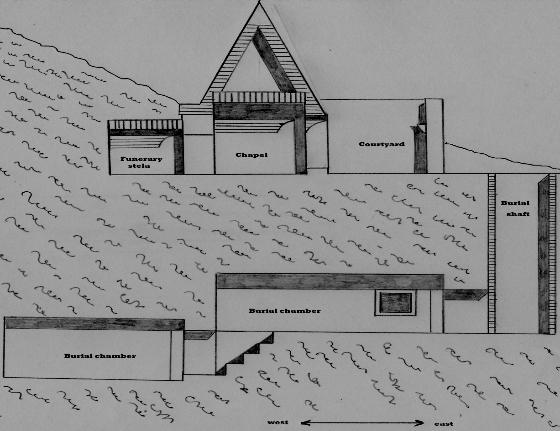
of this page might be the one visible just above the lotus flowers on the offering table. The tomb belongs to the category of chapel tombs. It had a following plan: at ground level a small open courtyard, the vaulted chapel of one room surmounted by a brick pyramid topped with a stone
pyramidion and with a large funerary stela beyond. The vaulted chapel was very brightly decorated. The shaft near the courtyard leads into the underground passage and two burial chambers. A plan of the tomb of Nakht-Min, no. 291. Drawn by Lenka Peacock, after a drawing of Bernard Bruyère, in Tombes Thebaines I. Tombe de Nakht-Min. In the chapel of the tomb a graffito in black ink echoes a 21st dynasty message left by
Ankhefenamun, “a scribe of the Tomb”, son of Butehamun.
“Yours is the West, ready for you, all blessed ones are hidden in it, sinners do not enter nor any unjust. The scribe Butehamun has landed at it after an old age, his body being sound and intact. Made by scribe of the Tomb Ankhefenamun”.
Irynefer’s tomb no 290 at Deir el-Medina

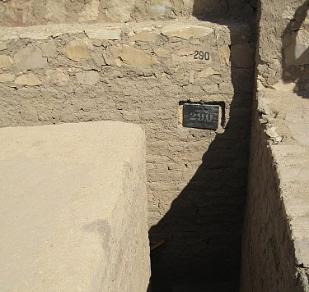
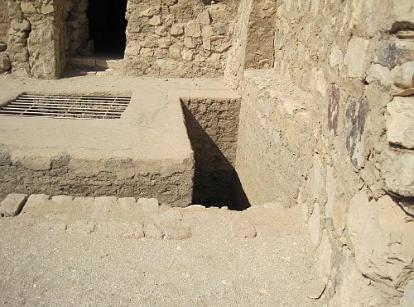
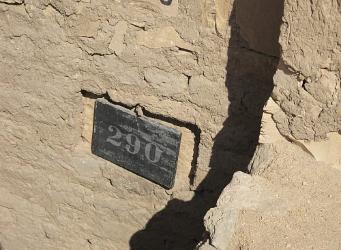
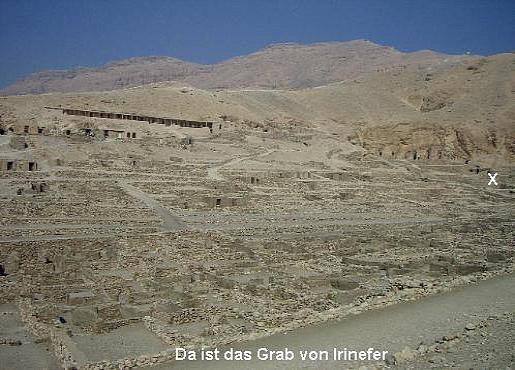




Irynefer’s tomb no 290 at Deir el-Medina
The tomb lies at the far end of the Western cemetery and shares the forecourt with the earlier
tomb of Nu and Nakht-Min TT 291. It consists of the entrance, antechamber and the burial chamber.
The tomb owner was Irynefer, a necropolis workman of the Ramesside Period. He lived in the village in
the 19th dynasty during the early part of Ramesses II’s reign. His title was the “Servant in the
Place of Truth”. The entrance to the tomb was identified by Bernard Bruyère during the season of
1922/1923. Bruyère’s drawing of the exact position of the tomb and its surroundings can be found
in his manuscript MS 2004 0144 017, dated Januray 31st 1923, which was digitised
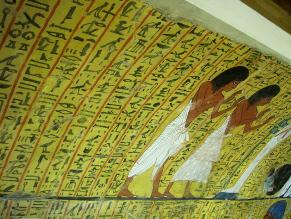
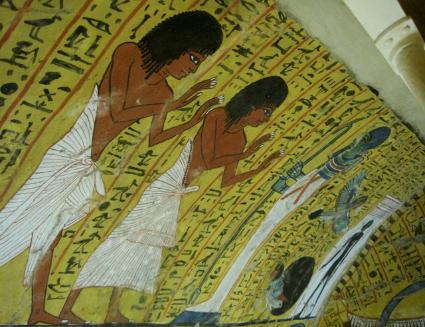
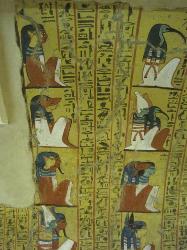
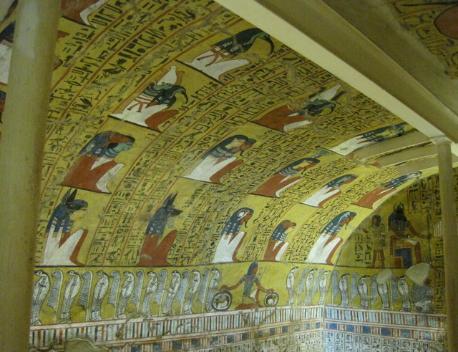
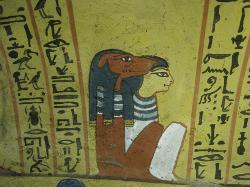
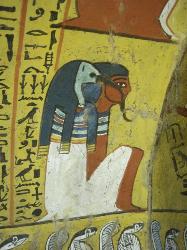
The tomb belongs to the most interesting corpus of the Ramesside tombs due to its beautifully decorated
vaulted burial chamber. A short passage leads to the burial chamber. It is decorated with hieroglyphs and
with a lying jackal Anubis, who looks towards the tomb entrance. The brick vault of the burial chamber
was plastered and decorated with colourful scenes and inscriptions providing us with the names and titles
of family members. The background to the scenes was painted yellow.
The scenes include illustrations from different spells of the Book of the Dead, images of funerary
divinities, demons and manifestations of the deceased’s ba and his shadow.
Another, later, plan dated February 9th 1923 comes from
Bruyère’s dig diary – from January 27th 1923 mentions excavations in the
Northern area of the Western necropolis, where a large court with 2 tomb entrances was discovered.
Each entrance had a shaft in front of it. Bruyère suggested that P1 (on his plan) could be entrance into
Irynefer’s (AriNefer) tomb. Fragments of several ancient Egyptian objects and a lamp from Christian
times were found in this area.
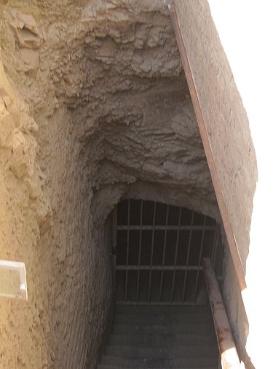
The photographs of the entrance
to the tomb and its immediate
surroundings in November 2011
The steps leading down towards
the entrance into the antechamber
The tomb belongs to the most interesting corpus of the Ramesside tombs due to its beautifully decorated
vaulted burial chamber. A short passage leads to the burial chamber. It is decorated with hieroglyphs and
with a lying jackal Anubis, who looks towards the tomb entrance. The brick vault of the burial chamber
was plastered and decorated with colourful scenes and inscriptions providing us with the names and titles
of family members. The background to the scenes was painted yellow.
The scenes include illustrations from different spells of the Book of the Dead, images of funerary
divinities, demons and manifestations of the deceased’s ba and his shadow.
Another, later, plan dated February 9th 1923 comes from Bruyère’s manuscript
MS 2004 0144 027 and shows the name of AriNefer with a question mark:
http://www.ifao.egnet.net/bases/archives/bruyere/?id=MS_2004_0144_027
Bruyère’s dig diary MS_2004_0144_018 from January 27th 1923 mentions excavations in the
Northern area of the Western necropolis, where a large court with 2 tomb entrances was discovered.
Each entrance had a shaft in front of it. Bruyère suggested that P1 (on his plan) could be entrance into
Irynefer’s (AriNefer) tomb. Fragments of several ancient Egyptian objects and a lamp from Christian
times were found in this area.
http://www.ifao.egnet.net/bases/archives/bruyere/?id=MS_2004_0144_018
Photography © Elvira Kronlob 2011
Photography © Elvira Kronlob 2011
The photographs of the entrance
to the tomb and its immediate
surroundings in November 2011
Photography © Elvira Kronlob 2011
Photography © Elvira Kronlob 2011
Photography © Elvira Kronlob 2011
The steps leading down towards
the entrance into the antechamber
To view more photos of the inside of the tomb, follow the link to Claudia Ali and Ali Na’im’s web site at
http://www.leben-in-luxor.de/luxor_kultur_graeber_tt290_irunefer.html
In the summer of 2010 Irynefer’s tomb was briefly opened to visitors; by autumn 2010 it was closed
again. In the middle of December 2011 the tomb opened while Sennedjem’s TT1 closed. Jane Akshar
described her visit to the tomb on her blog at
http://luxor-news.blogspot.com/2010/08/new-tomb-opens-at-deir-el-medina.html
Objects from the tomb are scattered around the globe in several museums.
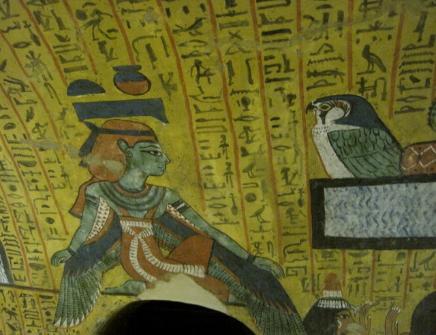
Just above the arch of the entrance
to the chamber, depiction of
green-skinned winged goddess Nut,
her name indicated by the hieroglyphs
shown above her head, is depicted.
Nut is kneeling in front of Horus and
Hesat.
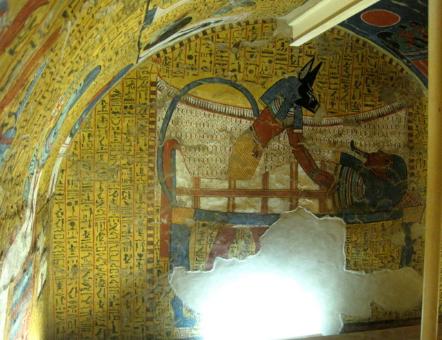
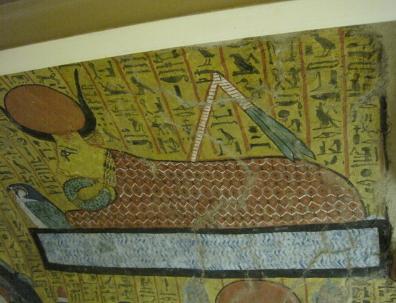
The depiction on the southern wall,
which lies towards the left side of
the burial chamber, shows the
mummification of the dead person,
who rests on a bed with lion heads.
Mummification is performed by
Anubis, the jackal-headed god of
the dead.
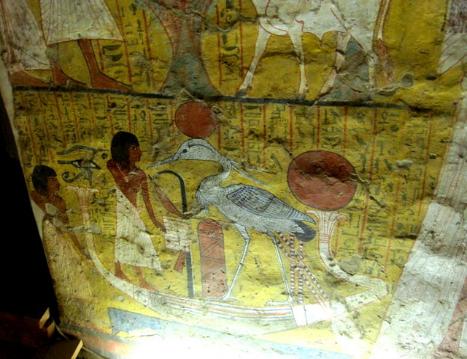
The last wall to be described
within the burial chamber is the
eastern wall. In the lower
register, we see Irynefer standing
in the solar barque worshipping the
phoenix, symbol of the sun god of
Heliopolis. The phoenix in the form
of a grey heron wears the solar
disk, the image of Re and assures
Irynefer of his future rebirth in
the manner of the sun (Germond,
2001, 258).
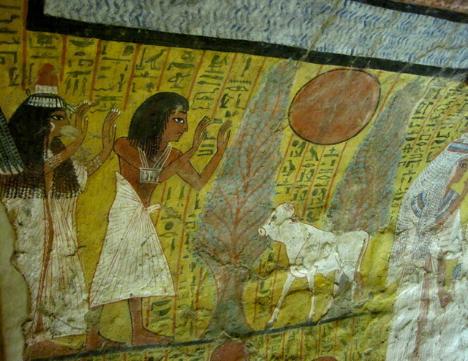
In the register above, the couple
prays to a young bull-calf standing
in between 2 sycamores, the
sacred trees of Heliopolis,the calf
being a prefiguration of the solar
bull as it moves through the sky
(Germond, 2001, 239).
Horus with the cow goddess Hesat,
a manifestation of Hathor, on a
reed mat on a pond, are depicted
above the calf scene.
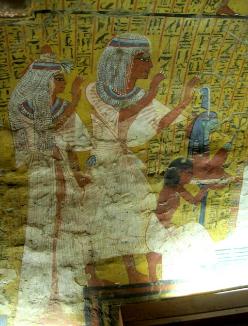
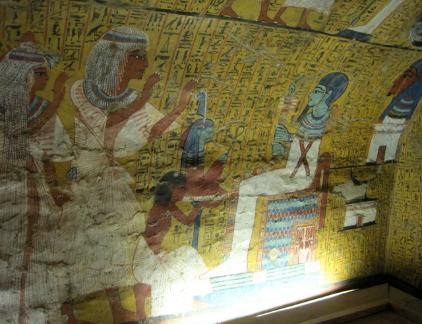
The following scene extends over
both registers: parents of
Irynefer, their age indicated by
their white hair, pay homage to
Ptah, the patron deity of
craftsmen. Irynefer himself kneels
in the scene in front of Ptah’s
throne and offers a figure of the
goddess Ma’at (Hawass, 2009,
195-197).
The rear part of the eastern wall is divided into two
registers. The upper register is dominated by an
extraordinary scene: it shows the worshipped god
Ptah standing in front of the enshrined black shadow
of the deceased and two ba-birds. One flies, the
other sits in front of a black sun.
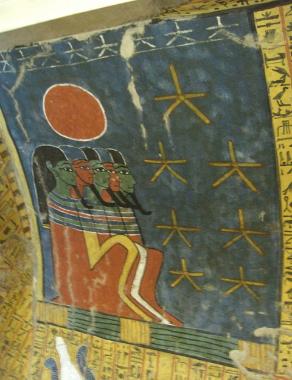
Above the scene with Osiris the vignette of the unusual
Spell 135 of the Egyptian Book of the Dead is shown.
Although the text of the spell is not present, the depiction
of 5 deities, 7 stars and a disk against a dark background
occurs in 5 other 19th dynasty tombs from Deir el-Medina.
According to David G. Smith, the spell could be a reference
to the flash of the solar corona and to “Bailey’s Beads”,
flashes of light occurring at the precise moment of a total
eclipse (for the source see below bibl. 11, 12).
“Another spell to be said when the moon is new on the first
day of the month. Open, O cloudiness! The bleared Eye of
Re is covered, and Horus proceeds happily every day, even
he the great of shape and weighty of striking-power, who
dispels bleariness of eye with his fiery breath.” (Faulkner,
2000,123)
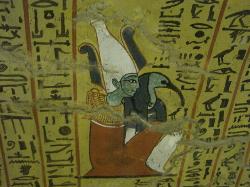
The lower register of the far side
of the western wall shows Anubis
leading Irynefer to Osiris seated
on his throne.
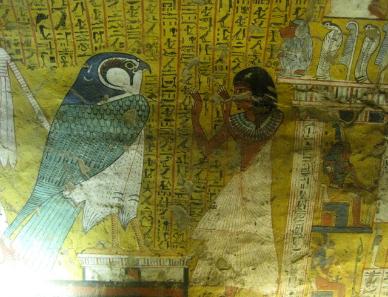
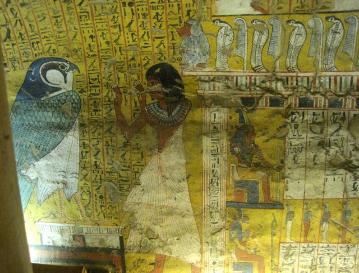
Next to the shrine there is a
representation of Irynefer who
worships Horus in the form of a
falcon. Horus holds a flagellum,
the sign of regeneration and
rebirth, which gave the power to
decide on entry into the afterlife.
On the entrance the visitor faces the western wall
and the frieze described earlier. In the shrine
within the frieze Ma’at and Shu sit on the left.
Before Shu 42 judges of the dead stand (Osiris
presides over them as the 43th judge of the dead).
Here Irynefer swears that he had not committed
any sin from a list of 42 sins (each judge
responsible for 1 sin), and recites a text known as
the “negative confession” from the Book of the
Dead. “… I did not cause the suffering of the
people, nor my relatives…. “
We turn to the last representation in the
chamber, which is located at the top of
the eastern wall near to the entrance.
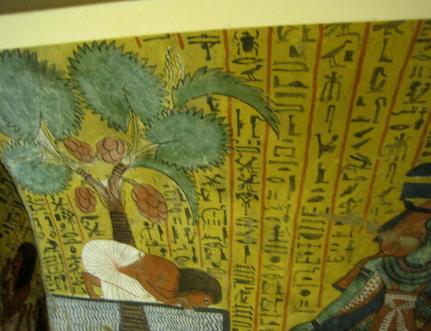
The painting is very similar to a scene in
TT3, the tomb of Pashedu: Irynefer is
kneeling before a dom palm tree and
drinking from a pool of fresh water
(Dodson, 2008, 266-269). The
illustration belongs to a spell for “drinking
water in the necropolis” in the Book of
the Dead. The design had to
accommodate 3 different angles of view:
the pool is seen from above, Irynefer is
kneeling on the bank on the far side not
to obscure the water and the tree grows
at the near side of the pool but does not
obscure the kneeling figure
(Málek,2003,242).
All the photographs of the interior of the burial chamber are © of Elvira Kronlob 2012 and were taken in
autumn 2012. I am very grateful to her for taking the pictures and for giving me permission to publish
them on our web site.
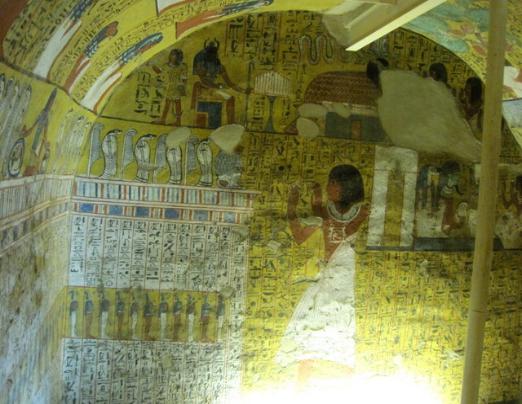
We will begin the tour of the tomb by looking to the right of the entrance towards the northern wall. In
its centre Irynefer stands with his hands raised in adoration towards a frieze that decorates this wall
and extends over the western wall. It is interspersed with protective symbols and hieroglyphs, where the
baboon is followed by a uraeus, separated from the next one by a feather, symbol of Ma’at
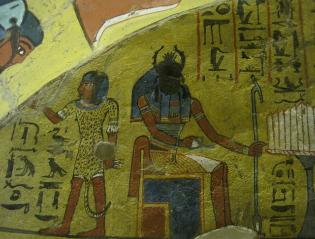
The top register of the northern
wall shows a representation of the
god Khepri sitting in front of the
offering table and a sem priest
standing behind him.
The right side of the top register
is mostly destroyed. Below the
destroyed scene in the middle
register Irynefer kneels before
Osiris and two gatekeepers
On the entrance the visitor faces the western wall
and the frieze described earlier. In the shrine
within the frieze Ma’at and Shu sit on the left.
Before Shu 42 judges of the dead stand (Osiris
presides over them as the 43th judge of the dead).
Here Irynefer swears that he had not committed
any sin from a list of 42 sins (each judge
responsible for 1 sin), and recites a text known as
the “negative confession” from the Book of the
Dead. “… I did not cause the suffering of the
people, nor my relatives…. “
In the upper register above the frieze various deities are depicted
Next to the shrine there is a
representation of Irynefer who
worships Horus in the form of a
falcon. Horus holds a flagellum,
the sign of regeneration and
rebirth, which gave the power to
decide on entry into the afterlife.
The lower register of the far side
of the western wall shows Anubis
leading Irynefer to Osiris seated
on his throne.
Above the scene with Osiris the vignette of the unusual
Spell 135 of the Egyptian Book of the Dead is shown.
Although the text of the spell is not present, the depiction
of 5 deities, 7 stars and a disk against a dark background
occurs in 5 other 19th dynasty tombs from Deir el-Medina.
According to David G. Smith, the spell could be a reference
to the flash of the solar corona and to “Bailey’s Beads”,
flashes of light occurring at the precise moment of a total
eclipse (for the source see below bibl. 11, 12).
“Another spell to be said when the moon is new on the first
day of the month. Open, O cloudiness! The bleared Eye of
Re is covered, and Horus proceeds happily every day, even
he the great of shape and weighty of striking-power, who
dispels bleariness of eye with his fiery breath.” (Faulkner,
2000,123)
The depiction on the southern wall,
which lies towards the left side of
the burial chamber, shows the
mummification of the dead person,
who rests on a bed with lion heads.
Mummification is performed by
Anubis, the jackal-headed god of
the dead.
The last wall to be described
within the burial chamber is the
eastern wall. In the lower
register, we see Irynefer standing
in the solar barque worshipping the
phoenix, symbol of the sun god of
Heliopolis. The phoenix in the form
of a grey heron wears the solar
disk, the image of Re and assures
Irynefer of his future rebirth in
the manner of the sun (Germond,
2001, 258).
In the register above, the couple
prays to a young bull-calf standing
in between 2 sycamores, the
sacred trees of Heliopolis,the calf
being a prefiguration of the solar
bull as it moves through the sky
(Germond, 2001, 239).
Horus with the cow goddess Hesat,
a manifestation of Hathor, on a
reed mat on a pond, are depicted
above the calf scene.
The following scene extends over
both registers: parents of
Irynefer, their age indicated by
their white hair, pay homage to
Ptah, the patron deity of
craftsmen. Irynefer himself kneels
in the scene in front of Ptah’s
throne and offers a figure of the
goddess Ma’at (Hawass, 2009,
195-197).
The rear part of the eastern wall is divided into two
registers. The upper register is dominated by an
extraordinary scene: it shows the worshipped god
Ptah standing in front of the enshrined black shadow
of the deceased and two ba-birds. One flies, the
other sits in front of a black sun.
Just above the arch of the entrance
to the chamber, depiction of
green-skinned winged goddess Nut,
her name indicated by the hieroglyphs
shown above her head, is depicted.
Nut is kneeling in front of Horus and
Hesat.
We turn to the last representation in the
chamber, which is located at the top of
the eastern wall near to the entrance.
The painting is very similar to a scene in
TT3, the tomb of Pashedu: Irynefer is
kneeling before a dom palm tree and
drinking from a pool of fresh water
(Dodson, 2008, 266-269). The
illustration belongs to a spell for “drinking
water in the necropolis” in the Book of
the Dead. The design had to
accommodate 3 different angles of view:
the pool is seen from above, Irynefer is
kneeling on the bank on the far side not
to obscure the water and the tree grows
at the near side of the pool but does not
obscure the kneeling figure
(Málek,2003,242).
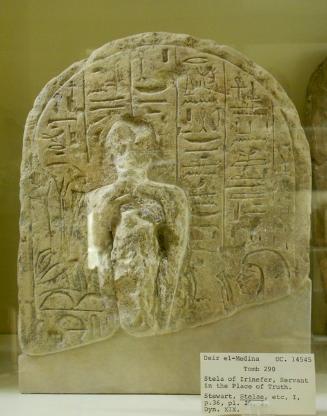
Stela of Irynefer
19th dynasty
From Deir el-Medina, tomb 290
Limestone
Petrie Museum of Egyptian Archaeology,
University College London, UC14545
The lower part of this round-topped stela is
missing. The upper part displays remains of a
raised relief of the god Ptah shown from the
front. At the bottom of the right side of the
stela there is a remainder of a depiction of a
man with his arms raised in adoration – his
head facing to the left and his hands
survived. The left bottom side shows remains
of a heaped offering table. The rest of the
stele is filled with 5 columns of hieroglyphic
inscription, where the worshipper is identified
as Irynefer, servant in the place of truth.
Height: 22 cm
Width: 20.5 cm
Stela of Irynefer
19th dynasty
From Deir el-Medina
Sandstone
Musee du Louvre. C311
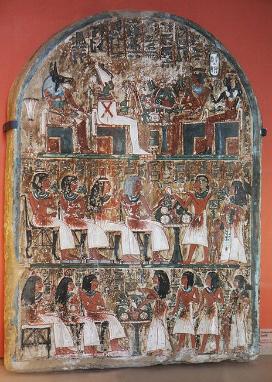
Painted stela of the ‘Artisan of the Royal Tombs’, Irynefer
and his family. The stela comes from the tomb chapel.
Top register: from left: Anubis sitting behind Osiris, both
facing the divine Amenhotep I and his mother
Ahmose-Nefertari.
The 2 lower registers show Irynefer and his wife censing
before his parents and brothers. As a contrast to the wall
painting in Irynefer’s tomb, where both Irynefer and his
wife are wearing white wigs, this stela shows Irynefer’s
father Siwadjyt as white-haired. The old age is indicated
by these two examples, the instances of which are not very
numerous. All seem to come from new Kingdom, especially
from the tombs of Deir el-Medina (Janssen, 2007,
159-161).
Irynefer before a table of bread
19th dynasty
From Deir el-Medina
Musee du Louvre. E12965
Found in the tomb of Irynefer.
Irynefer is sitting on a rock, brandishing
two knives. The short text above the
offerings indicates that the knives are
sharpened. The text of five vertical lines
above gives the names and affiliation of
Irynefer. The knives are thought to
express Irynefer’s powers over evil.
Perhaps this ostakon was intended to
invoke protection.
 khaled gamelyanl blogger