
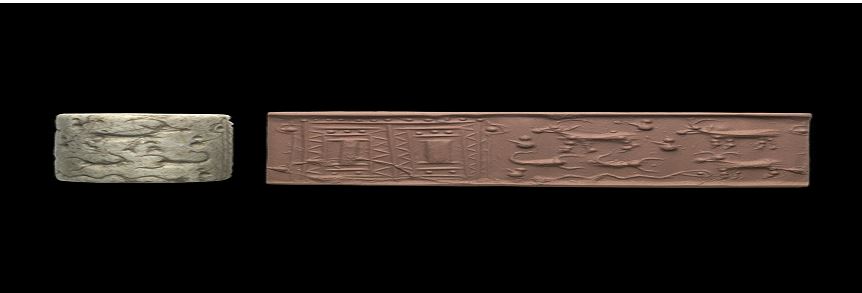
White calcite (marble) cylinder seal
From Mesopotamia
Late Uruk / Early Jemdet Nasr period, about 3200-3000 BC
An extensive trade route between eastern Mesopotamia and Syria and Egypt
This seal shows animals and pots in front of a shrine or temple. It is perhaps a ritual scene. Monumental buildings dating to the late fourth millennium and decorated with niches and buttresses have been excavated in southern Mesopotamia, especially at Uruk, and are found at a number of sites further north along the River Euphrates. The poles with rings were probably the symbol of a god or goddess but which one is unknown.
The seal is typical of a style using filed lines and drill-holes, found in the Diyala, north-east of Baghdad, but also in Syria. Seals like this are evidence of a trade network between the two regions.
The earliest cylinder seals were rolled over hollow clay balls containing tokens; later they were impressed on clay tags and tablets marked with tally signs. A variety of early scenes carved on the seals show economic activities, food production, processions or ritual acts. These may reflect different ‘departments’ within the central authority.
 khaled gamelyanl blogger