
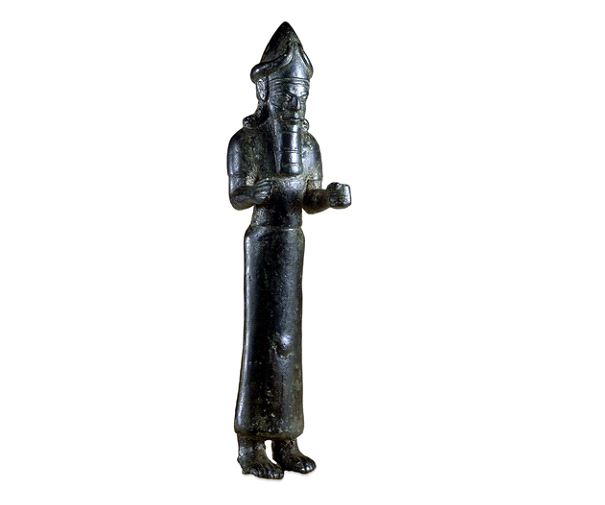
Bronze figure of a god
Urartian
8th-7th century BC
From Urmia, north-western Iran, or Van, modern Turkey
A deity in a horned head-dress
The Urartians adopted many of the traditions of Mesopotamia, including cuneiform writing. Mesopotamian gods were usually depicted wearing horned headdresses and this also became a feature of representations of Urartian deities, as this figure demonstrates.
The identity of this god is not known but Urartian texts show that Haldi was the principal deity of the Urartian pantheon. He is always named first in the trinity with Teisheba (storm god) and Shiwini (sun god). He was the god of the sky, the land, the state, herds and war.
The kingdom of Urartu had disappeared before 600 BC, possibly destroyed by raids of horse-borne warriors, known to the Greeks as Scythians, associated with the Medes from western Iran. The name survives, however, in that of its highest mountain, Ararat.
 khaled gamelyanl blogger