
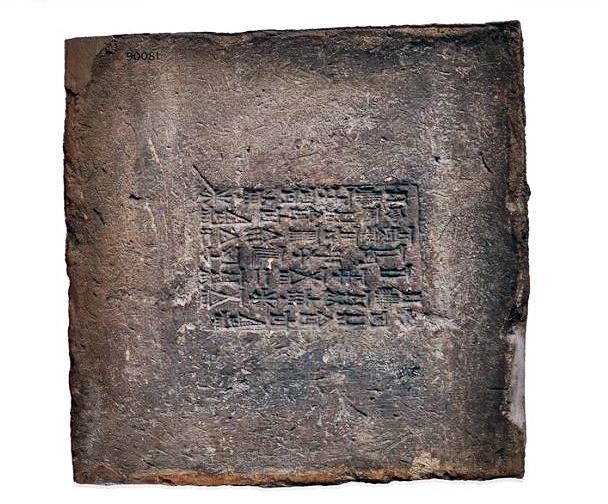
Brick of Nebuchadnezzar II
Neo-Babylonian dynasty,
about 604-561 BC,
From Babylon,
southern Iraq
Following the defeat of the Assyrian Empire by the Medes and Babylonians between 614 – 609 BC, Nebuchadnezzar II rebuilt the city of Babylon on a grand scale. It has been estimated that 15 million baked bricks were used in the construction of official buildings. The bricks are usually square and often bear cuneiform inscriptions, generally made with a stamp (as here), but occasionally written by hand.
The inscription on this brick translates: ‘Nebuchadnezzar, king of Babylon, who cares for Esagila and Ezida, eldest son of Nabopolassar, king of Babylon’. Esagila was the temple of the supreme god Marduk in Babylon, while Ezida was the temple of Nabu, god of writing, in the neighbouring city of Borsippa. The king’s most famous construction works were in Babylon where, along with Esagila, he built the famous Ishtar Gate and the ‘northern’ palace. He also rebuilt the ziggurat (temple tower)
called Entemenanki.
Babylon is described by the Greek historian Herodotus
(about 485-425 BC).
The writer Berosus also credits Nebuchadnezzar with the construction of the ‘Hanging Gardens’ which supposedly he built to remind his wife of her home, in the mountains of Iran. No evidence survives for the Gardens at Babylon, however, but there was a long tradition of extensive royal parks and gardens in Mesopotamia.
 khaled gamelyanl blogger