

The waters of the Nile divided Ancient Egypt into two parts: eastern and western, into the kingdom of the living and the kingdom of the dead. On the eastern bank of the Nile, the palaces of the pharaohs and huge temples were erected, glorifying the gods; pyramids, tombs and memorial temples were built on the west bank. Nowadays, Luxor is a small town on the right bank of the Nile, located 640 kilometers south of Cairo on the site of the ancient Thebes. This is one of the main archaeological centers of the world. In the world there is no other city where such a large number of ancient monuments would be concentrated. Luxor’s monuments make up almost a third of all historical relics. Here are the ruins of the majestic temple of Amun, the construction of which began under Pharaoh Amenhotep III (1455-19 BC). Construction work continued under subsequent rulers up to and including the Greco-Roman period.
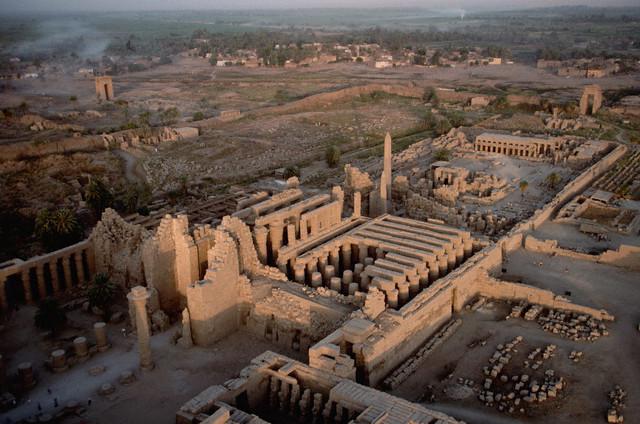
Karnak Temple, which in reality is a complex of monumental religious buildings, stretches over 80 hectares.
The temple complex of Luxor has become the main sanctuary of Ancient Egypt. . On the east bank of the Nile, in the City of the Living, the temples and palaces of Luxor and Karnak look in facades at sunrise.

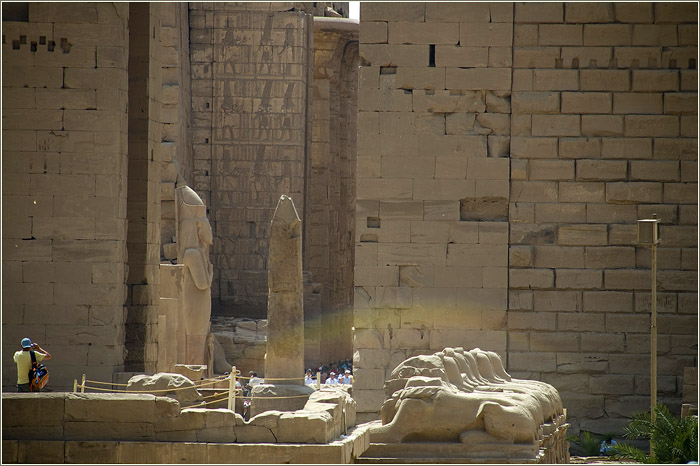
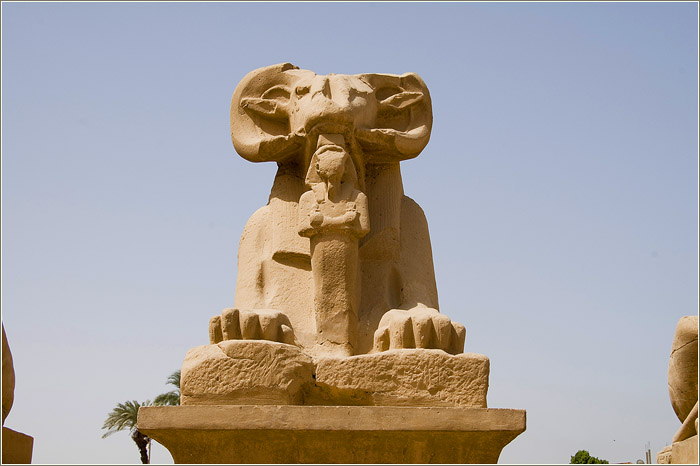
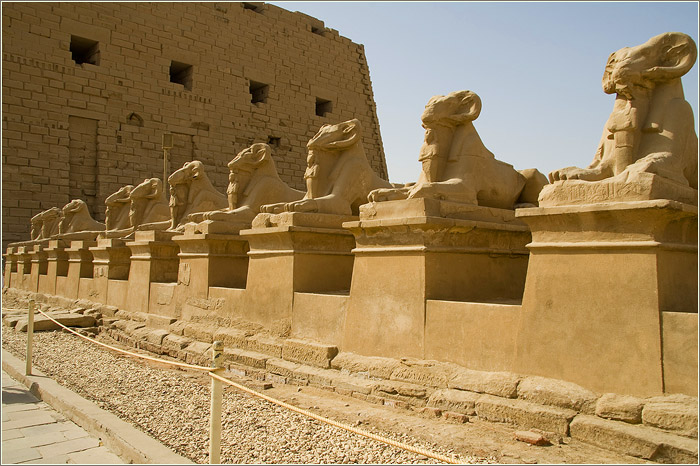
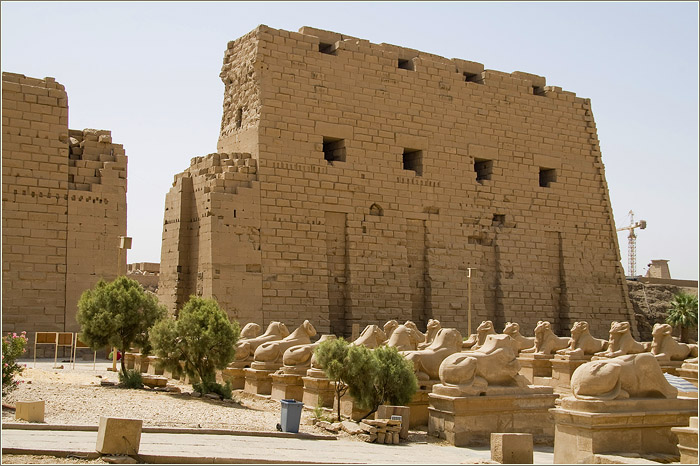
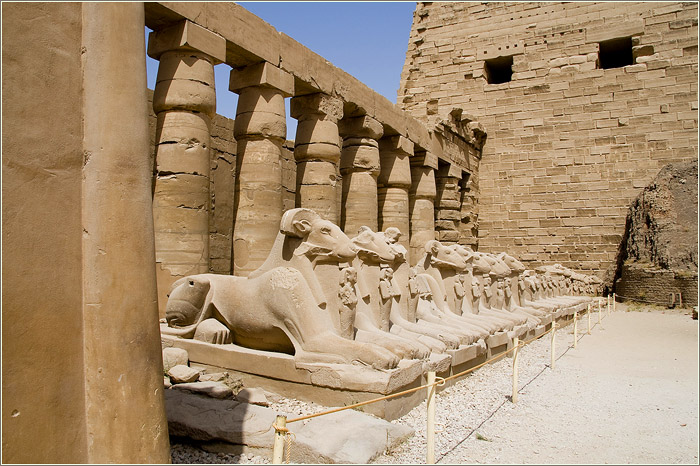
At the entrance to the temple is an avenue of sphinxes-rams. Baran is one of the incarnations of the god Amun, to whom the Karnak temple complex is dedicated.
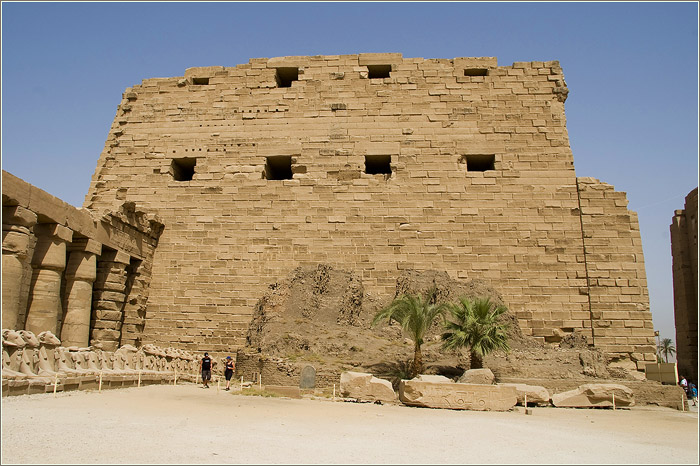
Passing along the avenue of sphinxes and bypassing the powerful pylon, we get to the territory of the temple.
On the right hand from the entrance is another row of sphinxes – rams.
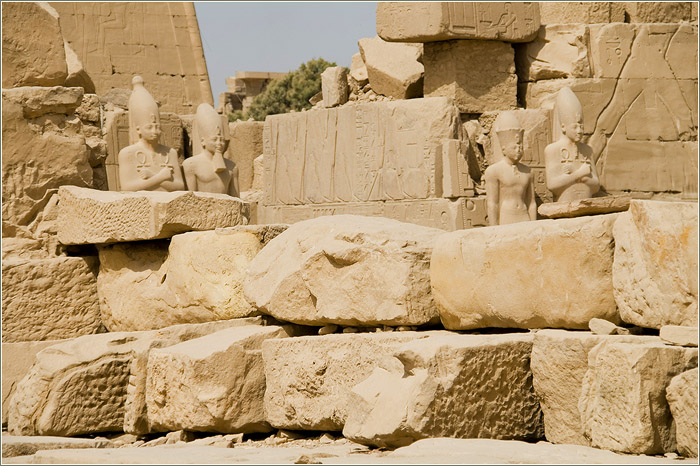
And under each – a small statue of Pharaoh, as if Pharaoh – under the protection of the god Amon.
A number of rams continue to the temple of Ramses II.
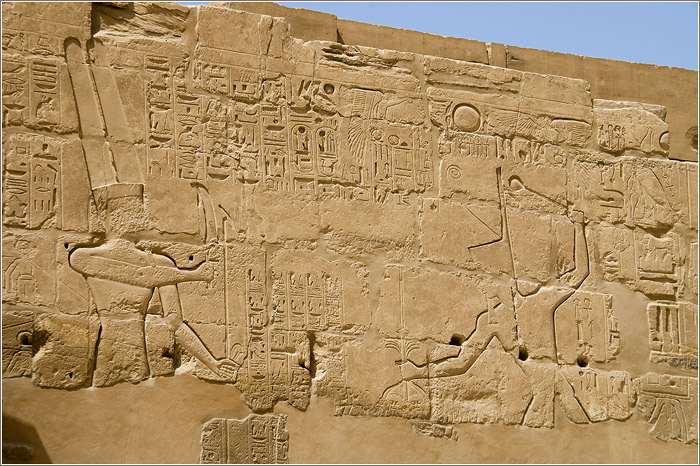
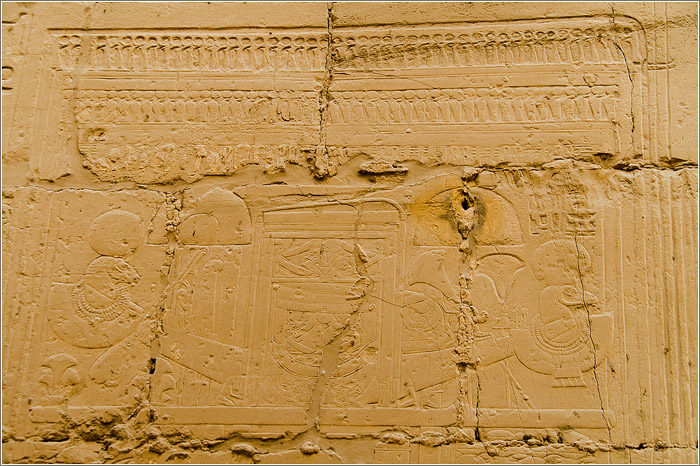
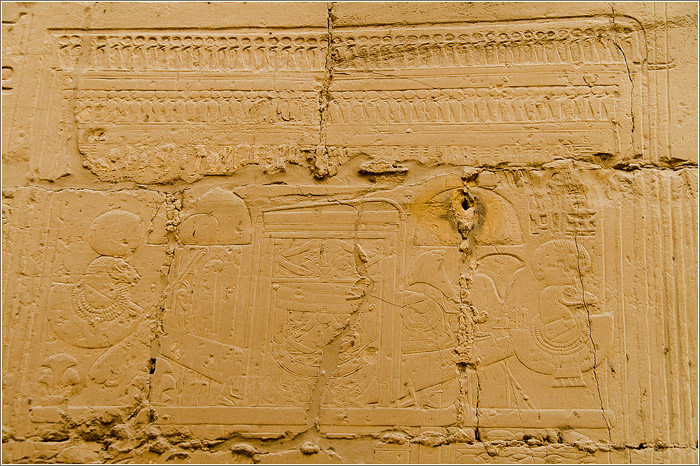
And on the wall are the remains of a bas-relief – as with the blessing of God, Pharaoh punishes the enemies of Egypt.
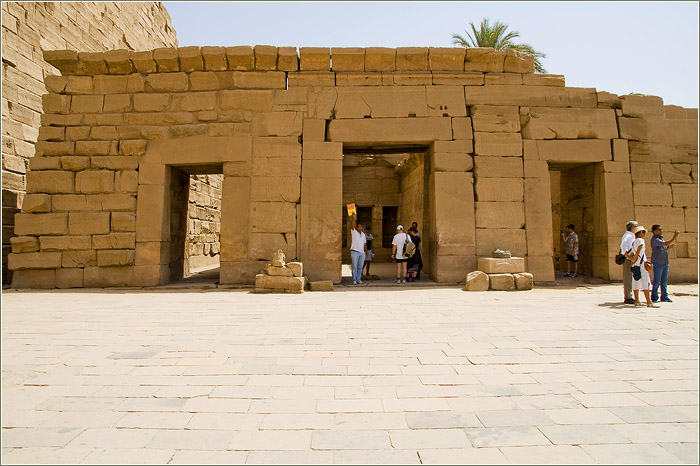
To the left of the entrance is the chapel of Seti II. It has three entrances to three sanctuaries – to the gods Amon, his wife Mut and son Khons.
In the center are the remains of a once existing colonnade.
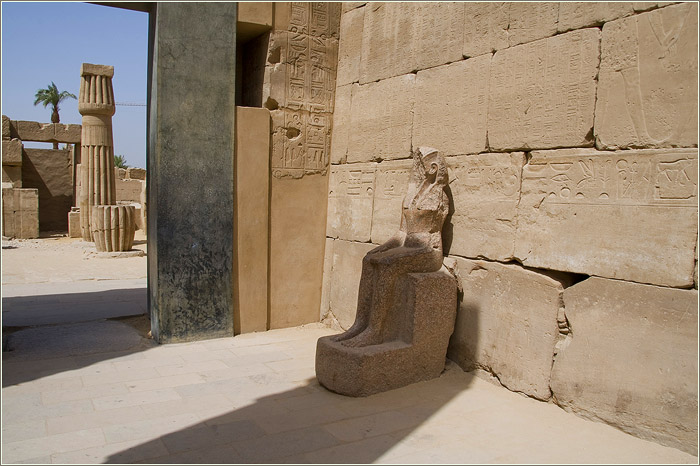
This is what remains of one of the sanctuaries.
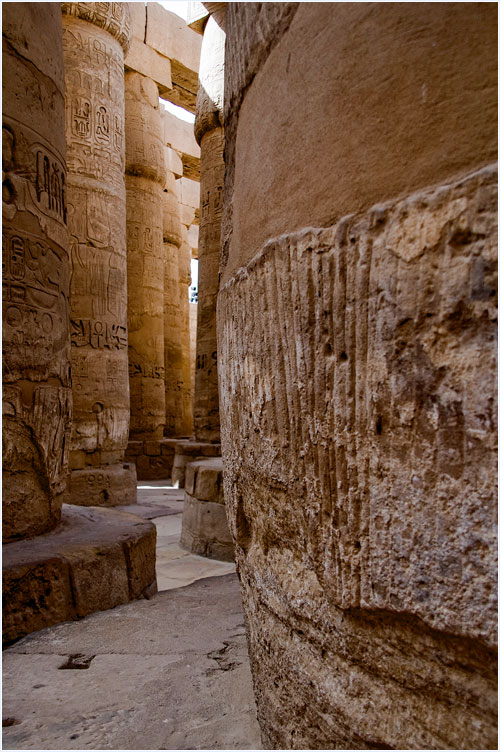
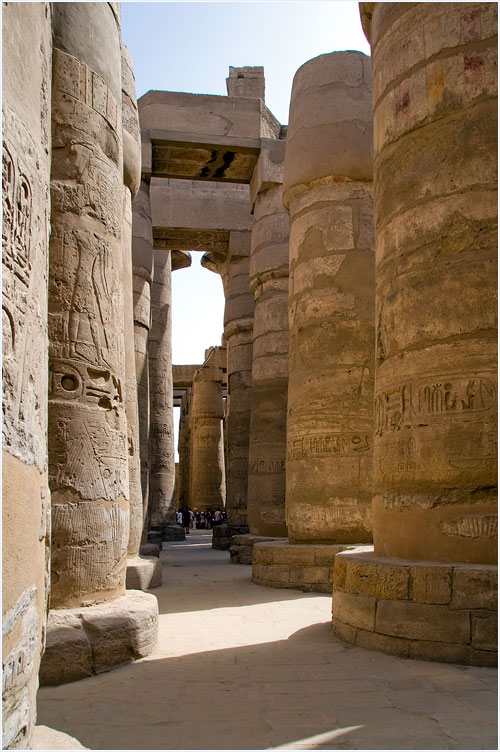
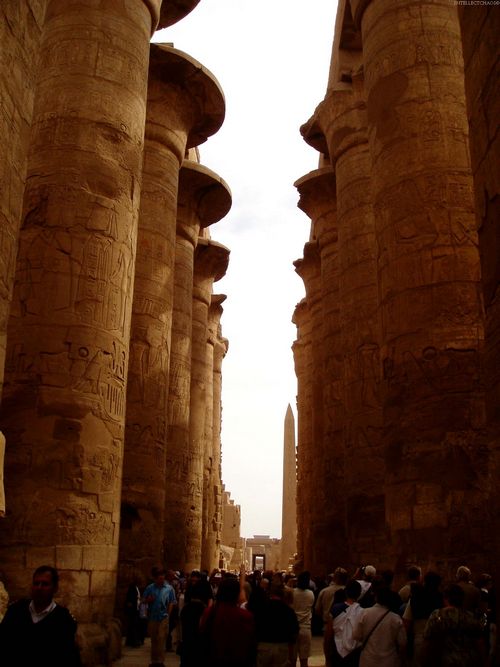
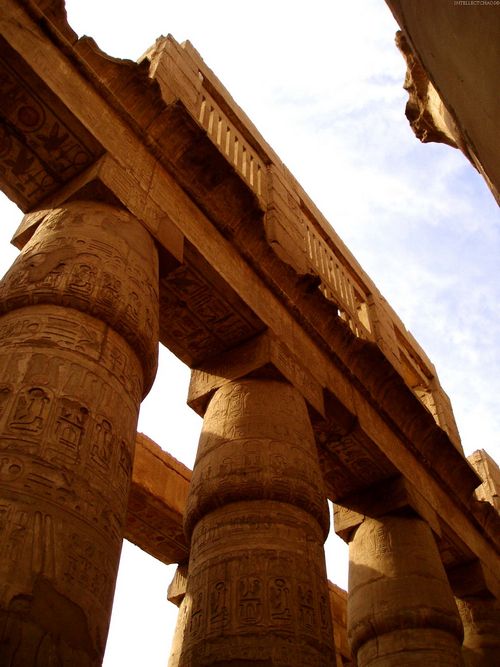
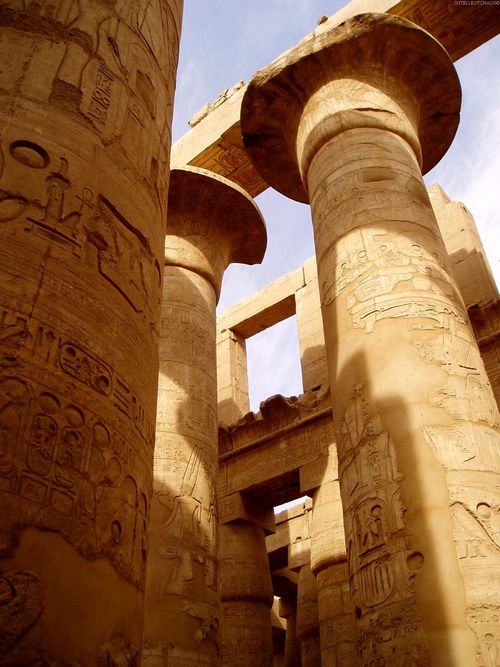
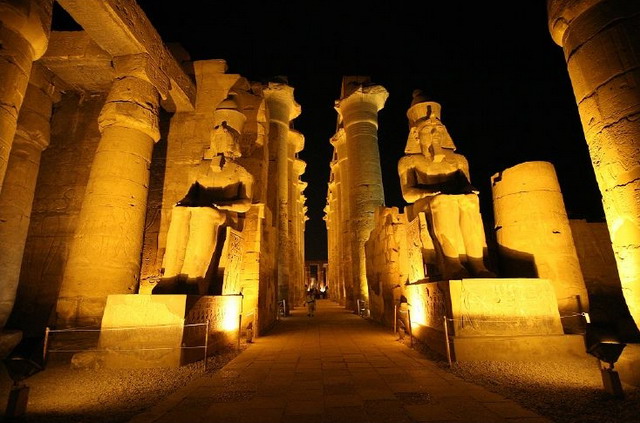
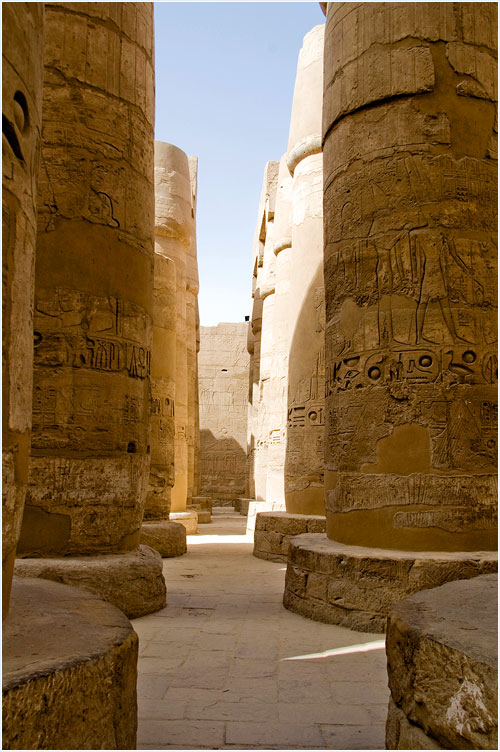
Following is a powerful columned hall.
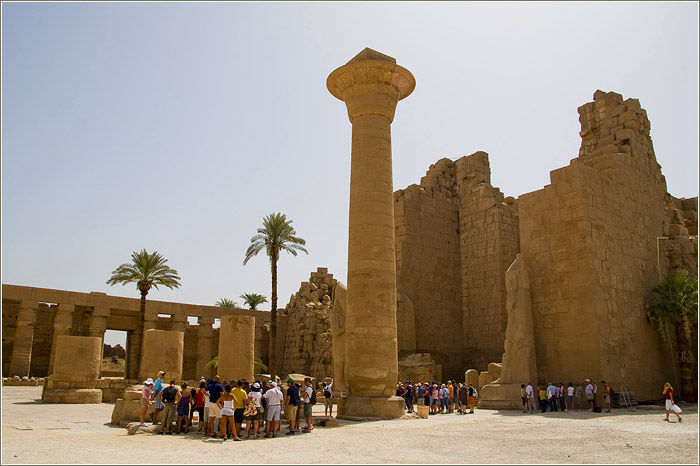
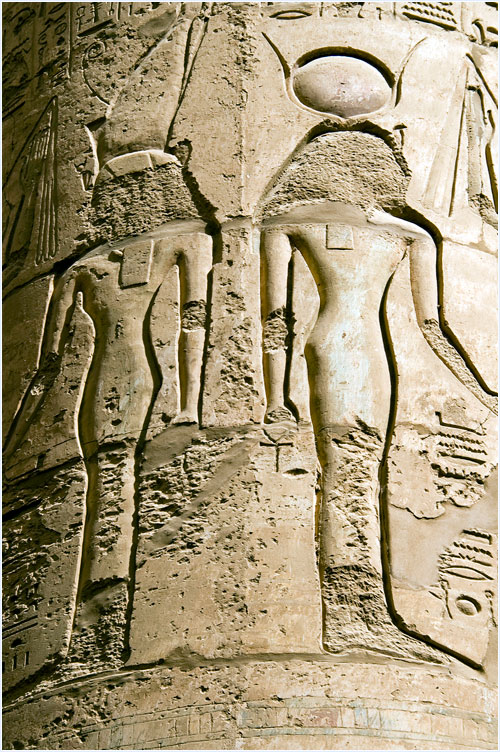
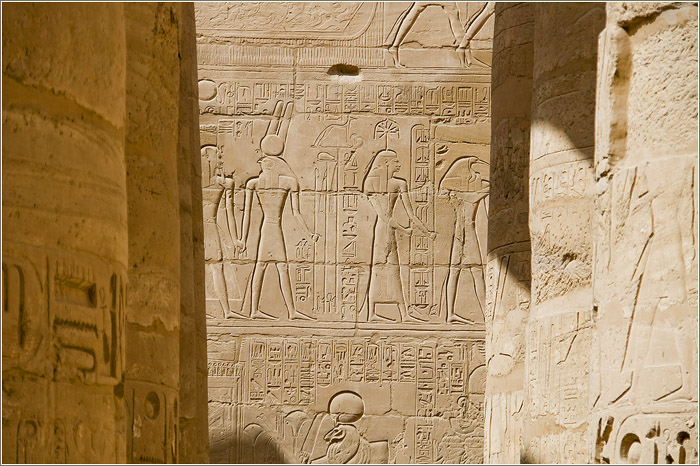
Previously, there was a roof over the columns, but after the collapse of the temple and the earthquake of 27 BC, the roof collapsed and now the columns support only the sky. The central 12 columns are 23 meters high. The rest are slightly lower. The columns are covered with bas-reliefs with historical and mythical stories about the life and exploits of the pharaohs.
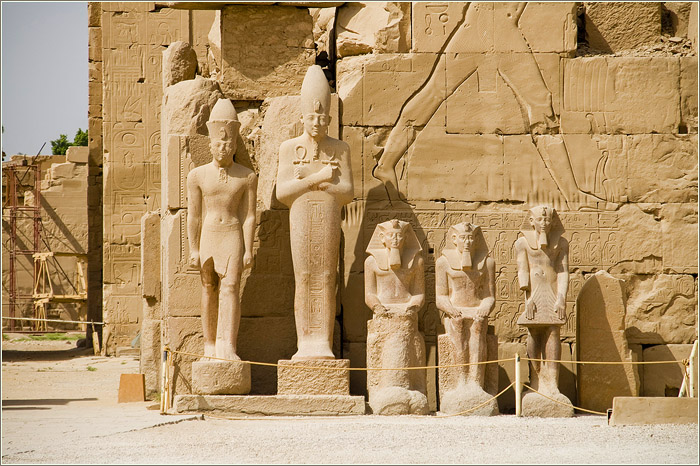
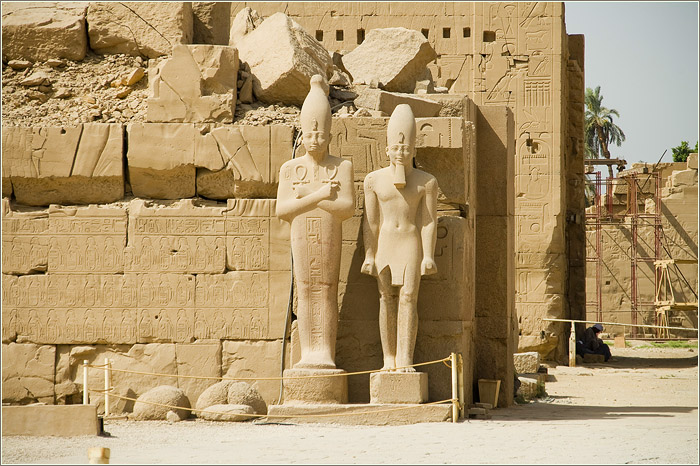
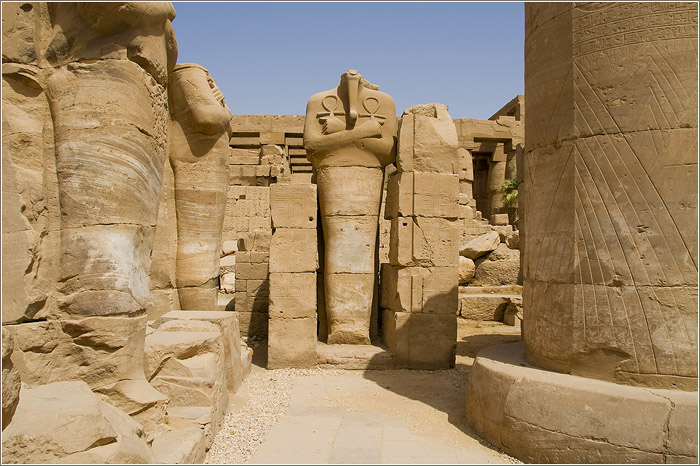
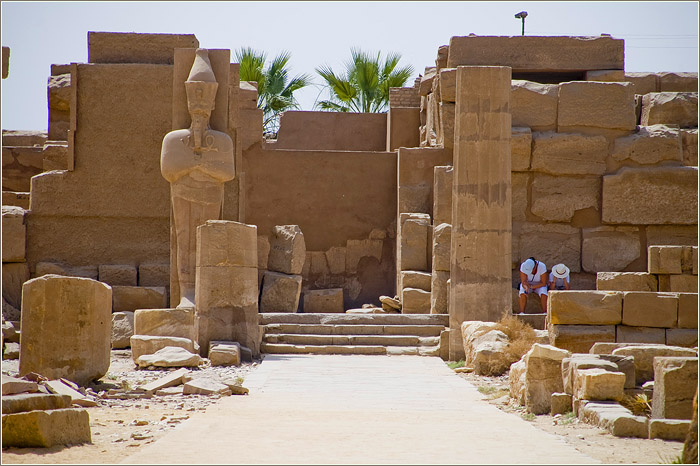
Leaving the columned hall in one of the aisles, we pass the following halls and get to the pylon, which has a whole group of statues of the pharaohs.
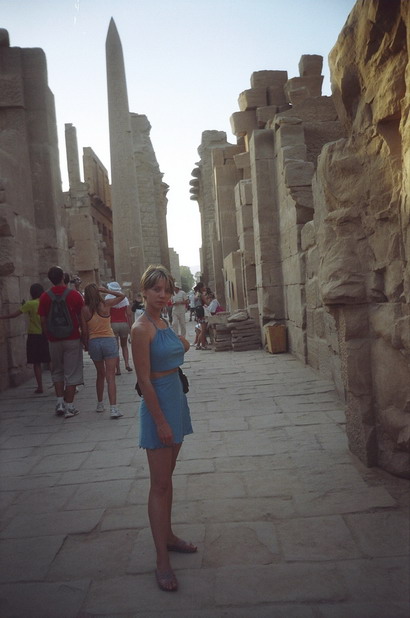
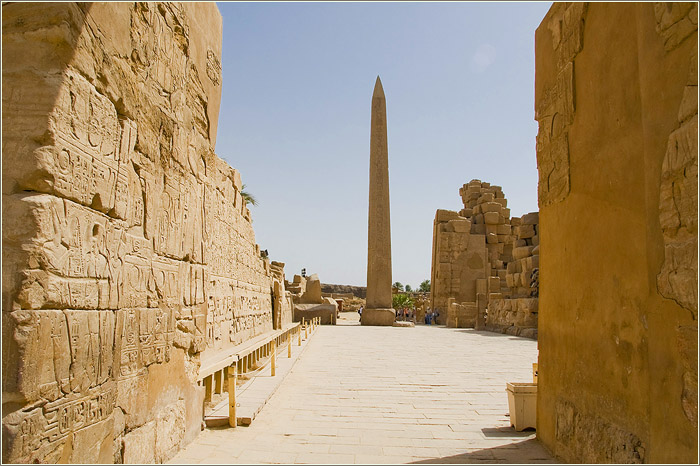
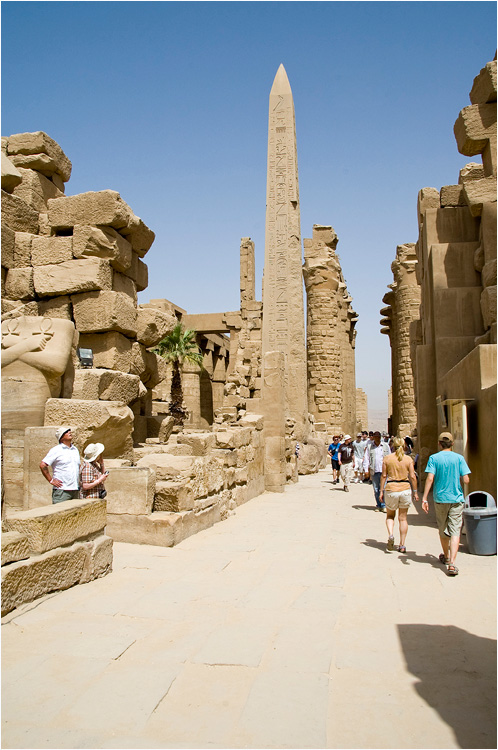
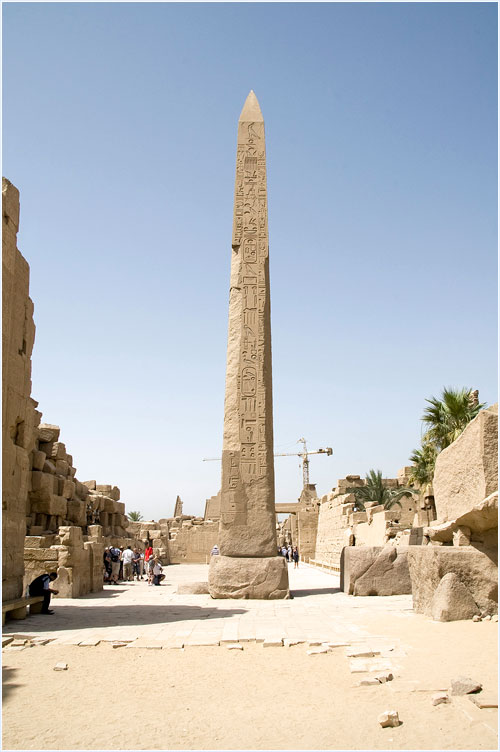
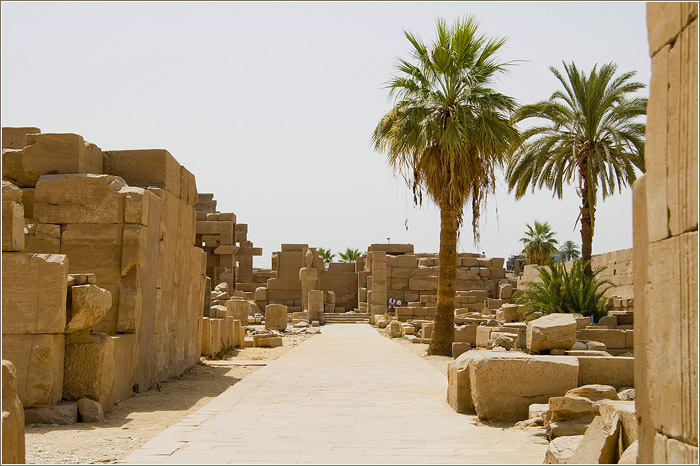
In general, dilapidated walls are a kind of maze. Then suddenly in the passage opens a view of the obelisk
Then the familiar heads of the pharaohs will reappear.
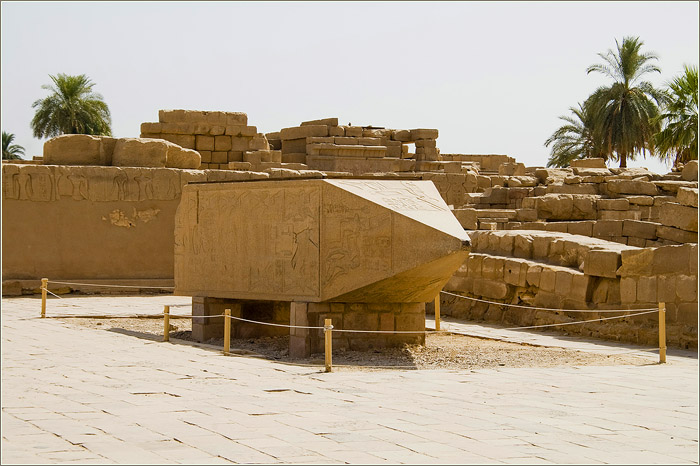
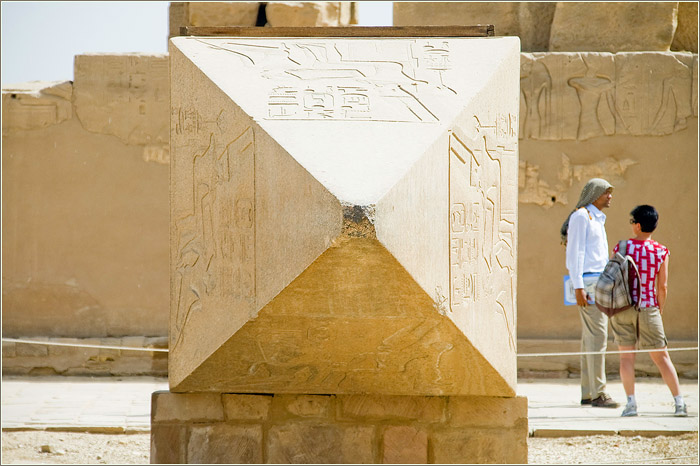
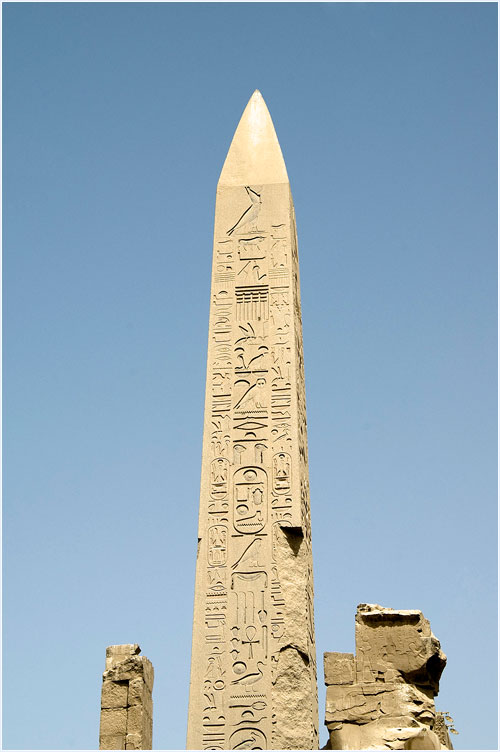
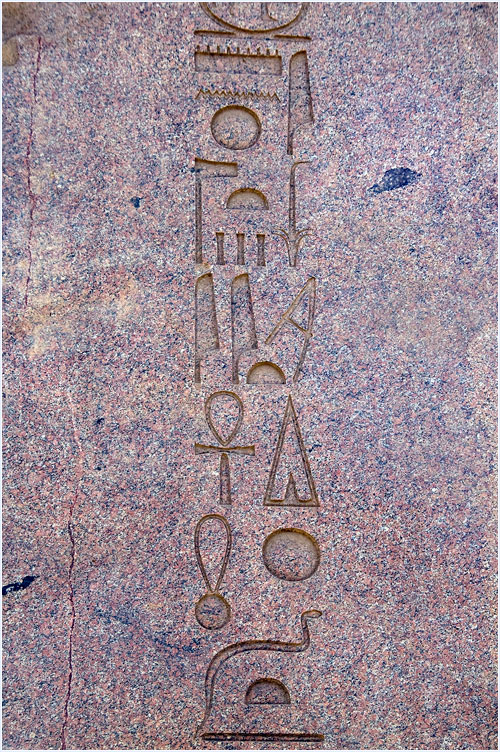
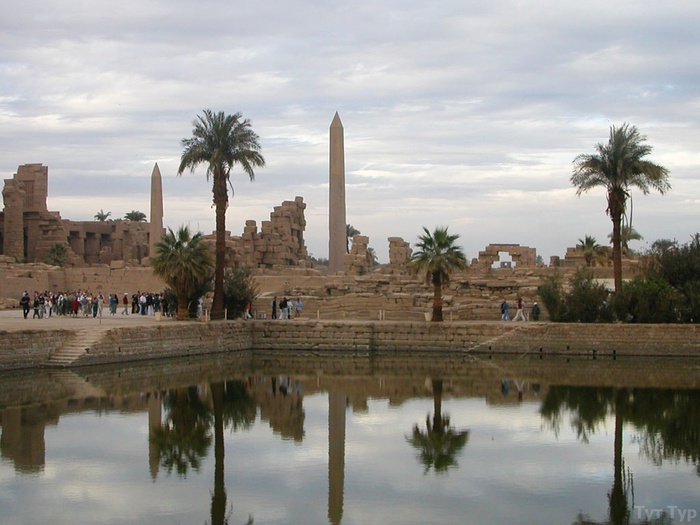
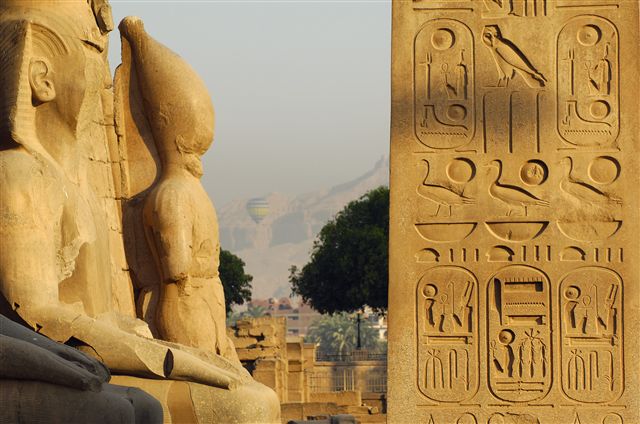
The verticals of the Karnak Temple are obelisks. One of them was installed by Queen Hatshepsut, a female pharaoh.
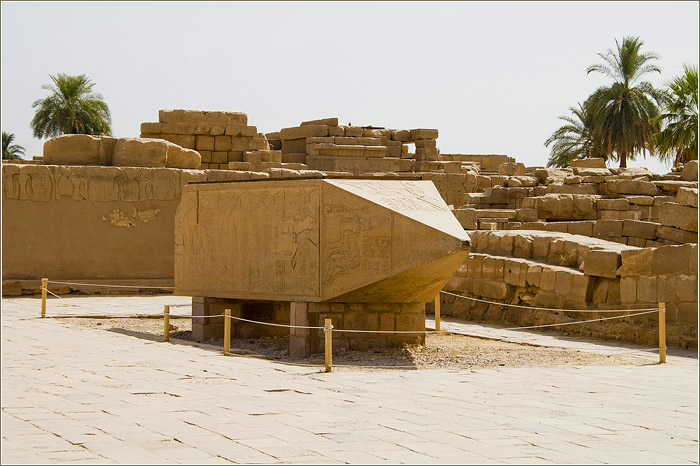
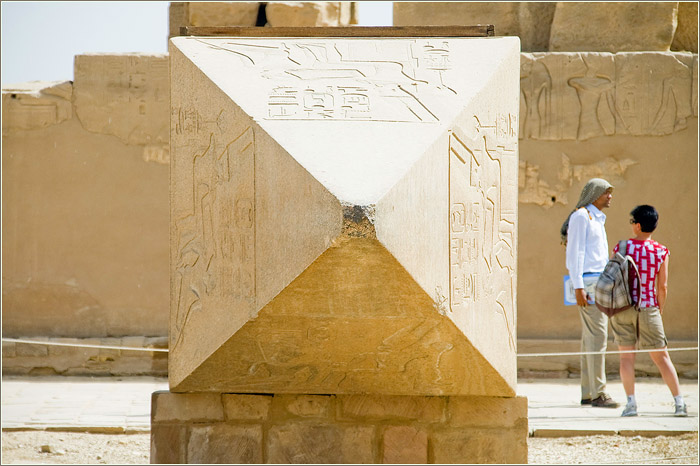
From another obelisk erected by Hatshepsut, only the top was left lying on the ground.
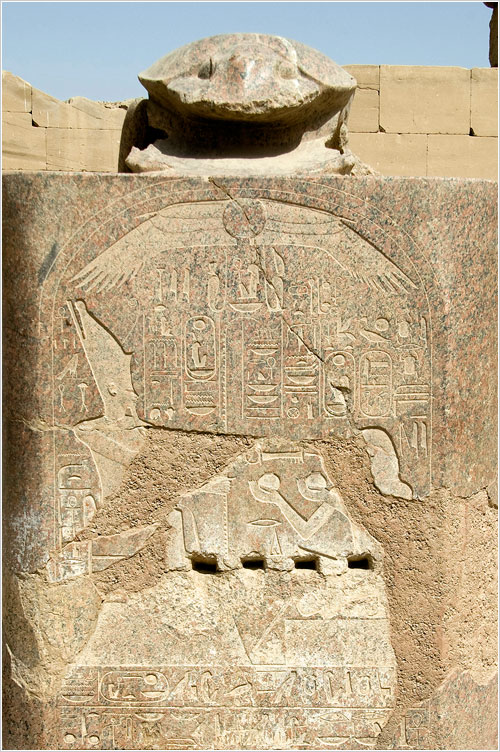
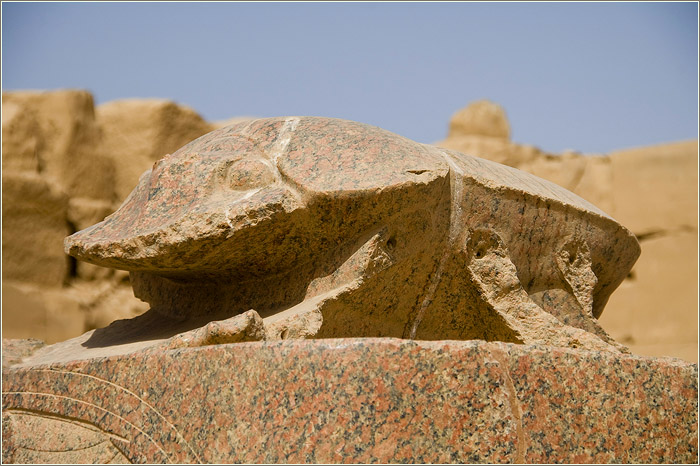
And next – a large scarab beetle on a pedestal.
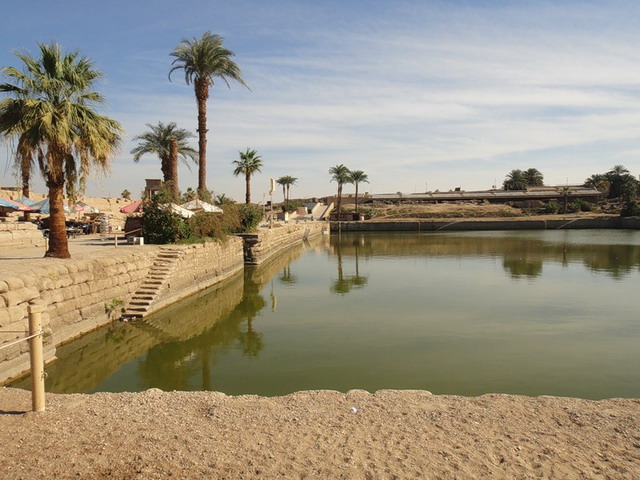
The beetle was the epitome of rebirth. It was believed that it was he who was rolling the sun at sunrise. And he himself is constantly reborn, appearing from a ball that he rolls himself. It stands almost on the shore of the sacred lake.
Priests washed themselves in the waters of this lake before performing rituals. The scarab beetle was established by Amenhotep III. The Egyptians believe that if you walk around this statue seven times and touch it with your hand, then your wish will come true.
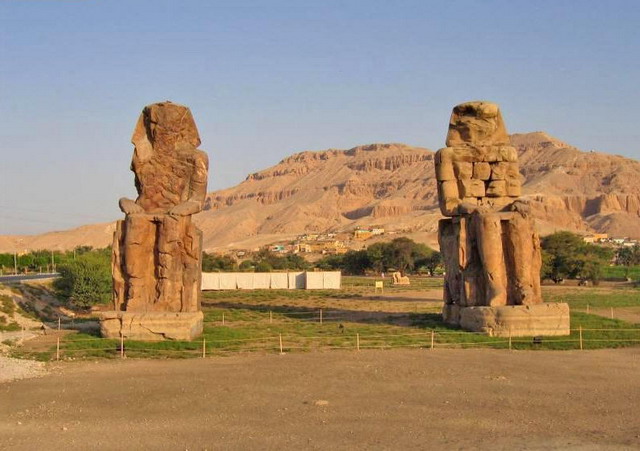
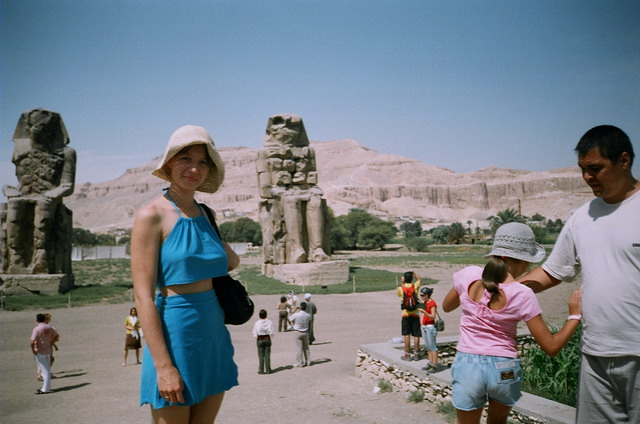
Colossi of Memnon are huge twenty-meter statues that will be the first to meet on your way if you decide to visit the “city of the dead.” Once upon a time, these gigantic giants were called upon to guard the memorial Temple of Amenhotep III, which, unfortunately, was destroyed to its very foundations. Their height is 21.5 meters, and they depict the seated Amenhotep III, who during his lifetime was the embodiment of God on earth. The statues themselves are made of monolithic blocks of sandstone, which was completely unknown delivered from the quarries of Memphis, located 700 km from Luxor.
Memnon olosses are the only surviving objects of this temple complex, which at one time was the largest and most pompous in Egypt. Scientists suggest that the memorial temple was destroyed due to the frequent spills of the Nile, and its remains were dismantled in stone blocks and used for other architectural structures
According to historical documents, from 27 BC in the works of Roman and Greek authors found information that in the morning one of the statues made a strange lingering sound, reminiscent of a moan. Superstitious Egyptians believed that these were the lost souls of the ancient pharaohs, but scientists suggest that this was due to temperature changes.
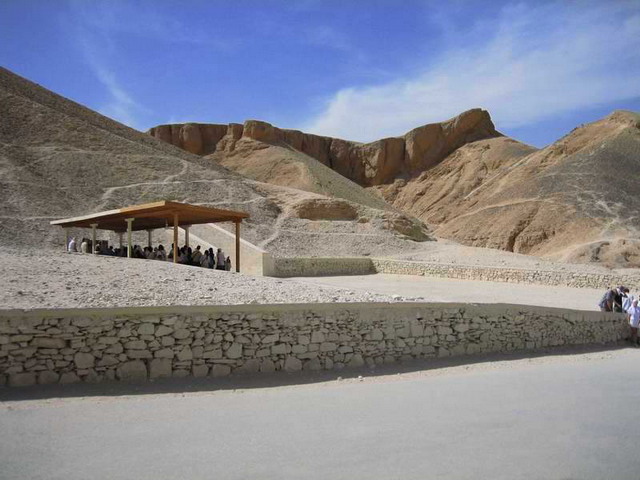
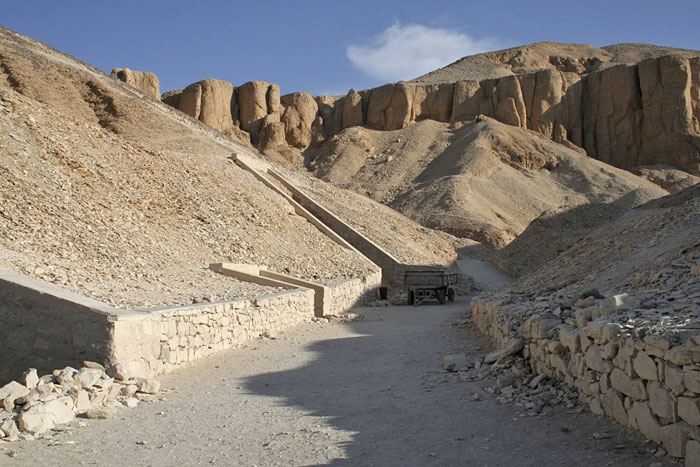
The Valley of the Kings is a fairly large space surrounded by mountains and, according to its archaeological significance, is one of the most prominent places on Earth, since numerous tombs of the rulers of Ancient Egypt were found here.
In ancient Egypt, a mystical culture was widely spread about the transition of the soul to the afterlife. In order to achieve this afterlife, the physical body must be carefully preserved and rich tombs were built for those who could afford the privilege of helping the spirit go to hell. Most kings were buried in the Valley of the Kings.
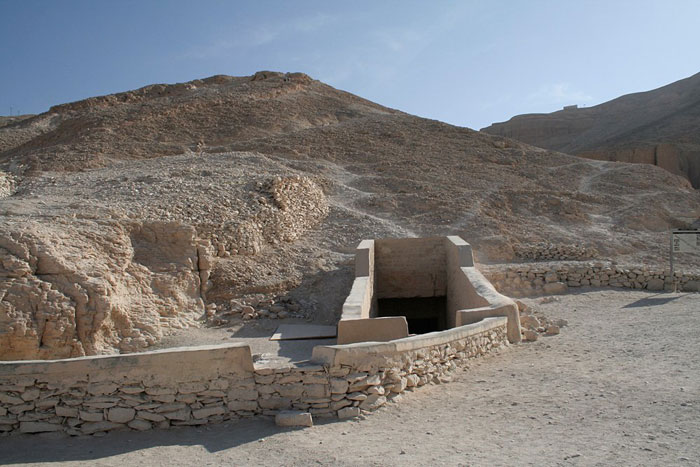
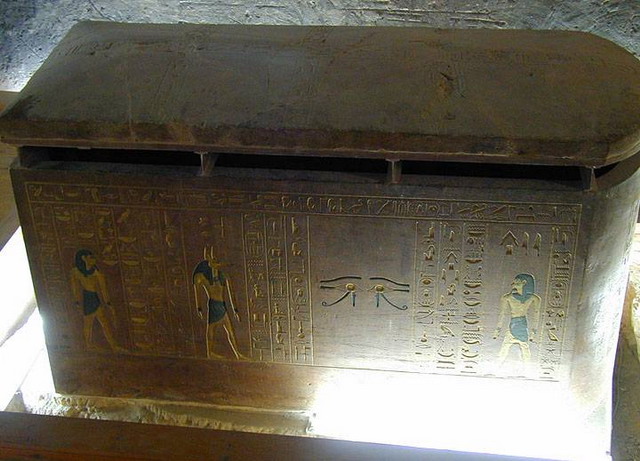
Located on the west bank of the Nile opposite the city of Thebes (present-day Luxor), the Valley of the Kings was used as a royal tomb for 500 years, from about the 16th to the 11th centuries BC. At least 63 tombs of the pharaohs and queens are in the Valley of the Kings. The tombs are carved in the rock, often have an inclined entrance tunnel up to 200 m long, extending down to a depth of 100 m and ending in several rooms. The interiors are a great example of the architecture of ancient Egypt in a pyramidal shape. The paintings and bas-reliefs adorning the walls of the tombs tell about the life and deeds of the deceased. On the surface, these tombs are barely visible. You can’t take pictures inside.
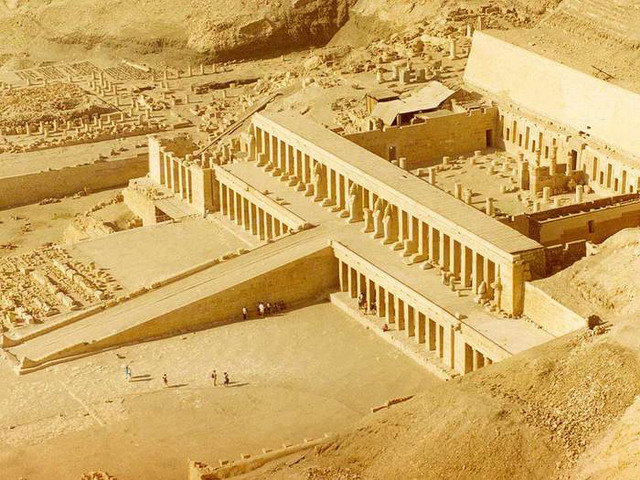
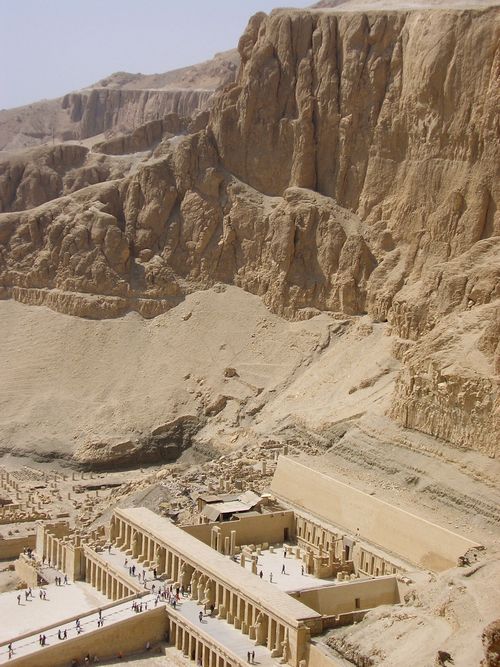
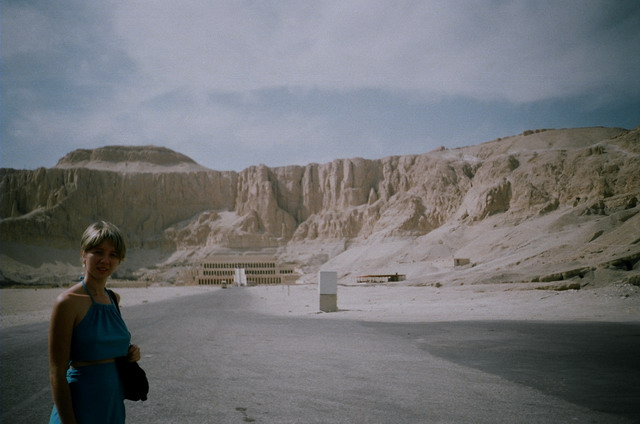
The enormous temple of Queen Hatshepsut in Deir al-Bahri is half immersed in the cliffs of the western bank of the Nile River – the Land of the Dead.
She was a beauty. The daughter of Pharaoh Thutmose I, one of the most influential people in Upper and Lower Egypt. But she did not have children, and therefore, after the death of her husband, Pharaoh Thutmose II, Queen Hatshepsut took power in her hands – despite the fact that by law the throne belonged to the king’s son, the offspring of another woman. For almost 20 years, Hatshepsut ruled Egypt, but the son of her late husband, Pharaoh Thutmose III, erased most of the traces of her reign and references to her. But even the remains of the Hatshepsut funerary temple make a strong impression.
The temple sanctuary is carved into the rock, the ground premises consist of three large-scale terraces, on which in ancient times grew gardens and glistened waters of artificial ponds. The terraces were connected by stairs, on the lower terrace there was a portico of 22 columns decorated with relief images, huge Hatshepsut figures stood in the courtyard, and a stone wall with images of falcons (symbols of Lower Egypt) with attributes of imperial authority surrounded the terrace. In ancient times, a road led to the temple, on the sides of which sphinxes with heads of Hatshepsut in the image of the god Osiris sat.
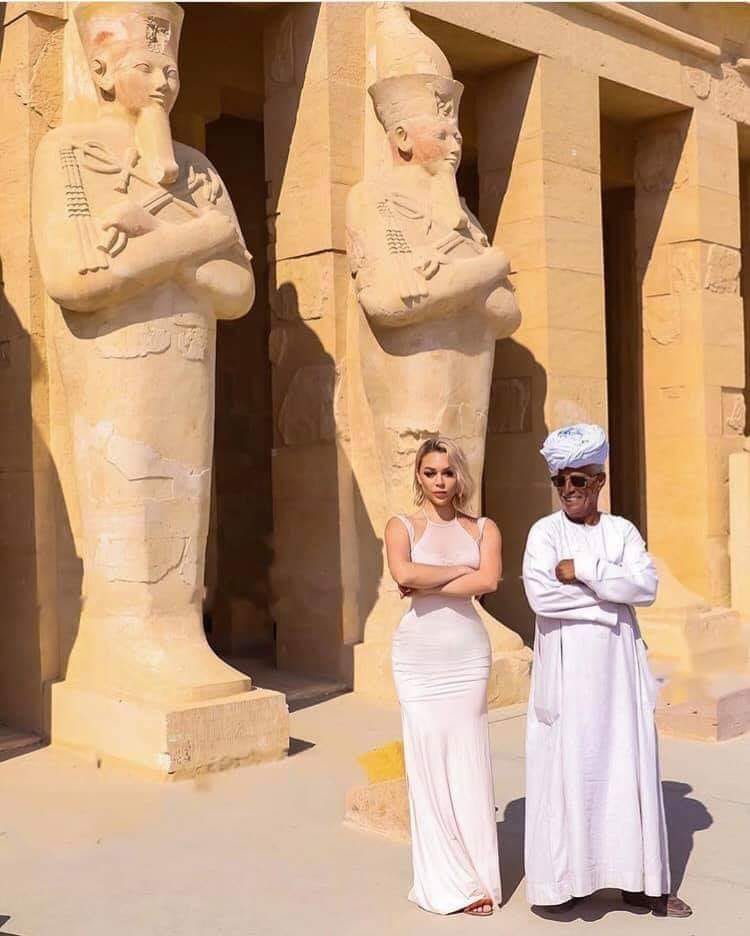
The entrance to the Hatshepsut Sanctuary is on the upper terrace. Once there were massive statues of Hatshepsut and huge stone columns
The Queen’s Sanctuary was considered one of the most luxurious in ancient Egypt. The floor was lined with plates of gold and silver, the walls of the main hall were made of copper, covered with an alloy of gold and silver, the doors were made of cedar. The vaults of the halls of the sanctuary were painted, and in the halls themselves there were more than 200 sculptures, including a huge marble statue of Hatshepsut. Most of the sculptures were broken and buried next to the temple on the orders of Pharaoh Thutmose III. Statues, images and references to Queen Hatshepsut were destroyed everywhere, throughout Upper and Lower Egypt. The temple itself was truly a miracle of engineering thought by the ancient Egyptians. If, for example, move away, then the stairs are not visible. Everything seems to be a solid wall.





 khaled gamelyanl blogger